
A building may look strong and impressive above ground, but its true strength begins beneath the surface. The foundation is one of the most important components of any building because it transfers the weight of the structure safely into the ground. When foundation design is properly planned and executed, it provides stability, durability, and protection against structural problems. When it is poorly designed, even a well-constructed building can develop serious defects.
What Is Foundation Design?
Foundation design is the process of determining the type, size, depth, and structural requirements of a building’s foundation. It considers factors such as the building’s weight, soil conditions, groundwater levels, site characteristics, and expected loads.
The goal is to ensure that the foundation can safely support the building without excessive settlement, movement, or failure.
Why Is Foundation Design So Important?
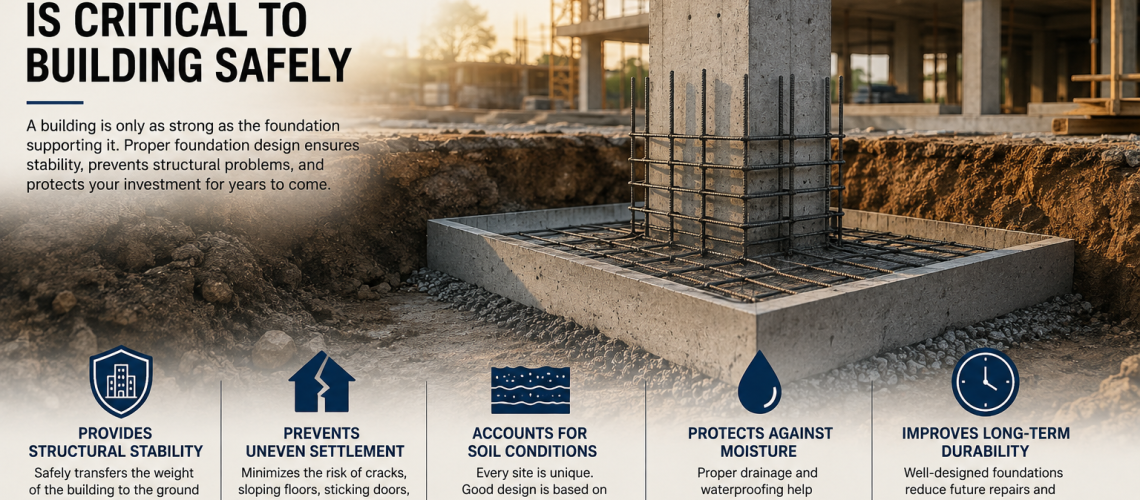
1. It Provides Structural Stability
The foundation carries the loads from walls, columns, floors, roofs, and other parts of the building. A properly designed foundation distributes these loads into the ground without overstressing the soil.
Without adequate support, parts of a building may shift or settle, potentially causing structural damage.
2. It Prevents Uneven Settlement
Some degree of settlement can occur as the ground adjusts to the weight of a building. However, excessive or uneven settlement can lead to problems such as cracked walls, sloping floors, sticking doors, and damaged finishes.
Proper foundation design considers the soil’s ability to support the proposed structure and helps minimise these risks.
3. It Takes Soil Conditions Into Account
Not all construction sites have the same soil characteristics. Some soils can support heavy structures effectively, while others may be weak, expansive, loose, or prone to significant movement.
A suitable foundation must therefore be selected based on the actual conditions of the site. In many projects, a geotechnical or soil investigation can provide important information for making this decision.
4. It Helps Protect the Building From Moisture
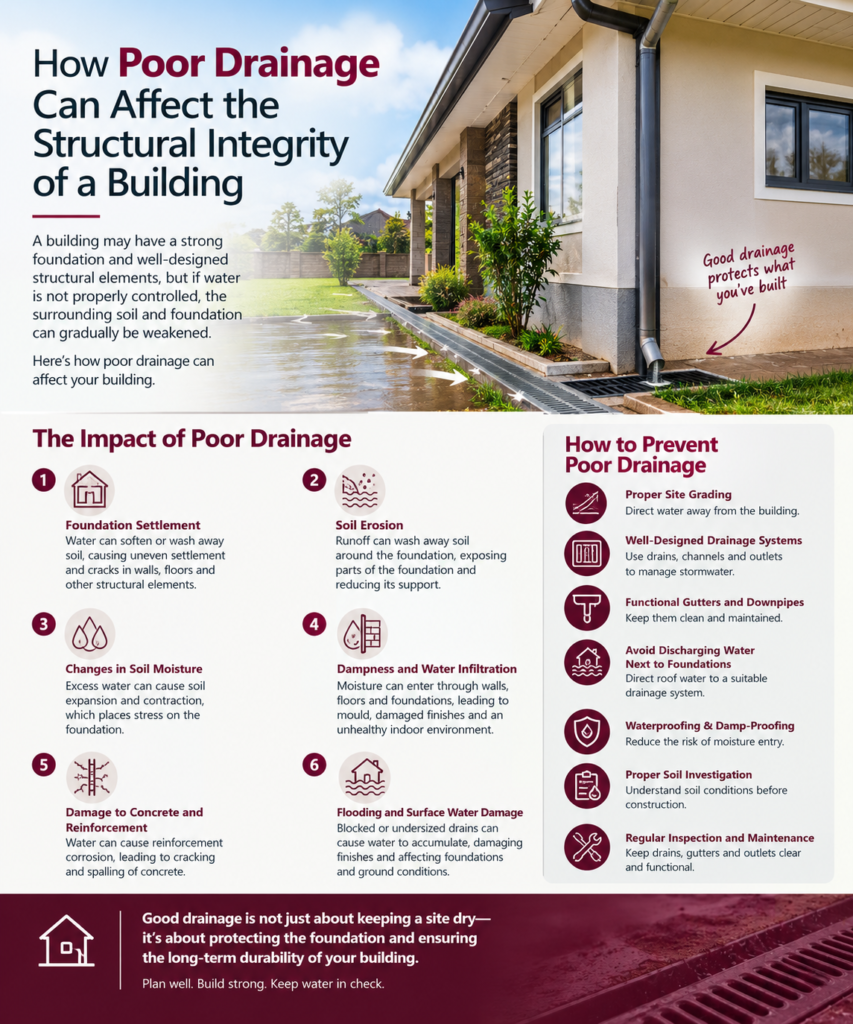
Water can create serious problems for foundations and the structure above them. Poor drainage, high groundwater, and inadequate waterproofing can contribute to dampness, deterioration, and other defects.
A well-planned foundation incorporates appropriate drainage, waterproofing, and moisture-control measures where necessary.
5. It Improves Long-Term Durability
Foundation problems can be extremely expensive and disruptive to repair once construction is complete. Designing the foundation correctly from the beginning helps reduce the likelihood of major structural repairs in the future.
A strong foundation therefore contributes not only to safety but also to the long-term value and durability of the building.
Factors That Influence Foundation Design
Several factors should be considered before foundation construction begins:
- Soil type and bearing capacity
- Building size and structural loads
- Number of floors
- Groundwater conditions
- Site slope and drainage
- Climate and environmental conditions
- Nearby buildings and structures
- Applicable building regulations and engineering requirements
Ignoring any of these factors can increase the risk of foundation-related problems.
Common Foundation Problems Caused by Poor Design
Poor foundation planning can contribute to several problems, including:
Cracking: Structural cracks may appear in walls, floors, or other components when the foundation moves excessively.
Differential settlement: Different sections of a building may settle at different rates, placing stress on the structure.
Foundation movement: Changes in soil moisture, poor drainage, or unsuitable soil conditions can cause movement.
Water penetration: Inadequate drainage or waterproofing can allow water to enter foundation areas.
Structural instability: In severe cases, inadequate foundations can compromise the safety and stability of the entire building.
The Importance of Professional Design and Construction
Foundation work should not be based on guesswork or simply copying what was done on another site. Every construction site has its own conditions, and the appropriate foundation solution depends on the building and the ground beneath it.
Qualified structural and geotechnical professionals can assess the site, determine appropriate foundation requirements, prepare designs, and provide guidance during construction. Proper supervision and adherence to approved drawings and specifications are equally important.
Conclusion
A safe building starts from the ground up. Foundation design is critical because it determines how effectively a structure transfers its loads to the ground and withstands conditions that may affect its stability over time.
Investing in proper site investigation, professional foundation design, quality materials, and skilled construction can help prevent costly structural problems and create a safer, more durable building.
Remember: a beautiful building is only as strong as the foundation supporting it.