
Building property is one of the biggest financial investments an individual or developer can make. Whether you are constructing your first home, developing rental apartments or putting up a commercial building, every decision made throughout the construction process has financial implications.
However, protecting your investment involves much more than having enough money to complete construction. It requires proper planning, professional guidance, financial discipline and continuous monitoring of the project.
Many construction problems that lead to financial losses are preventable. From engaging unqualified contractors to overlooking site conditions and failing to monitor construction costs, small mistakes can develop into expensive problems.
So, how can you protect your investment when building property?
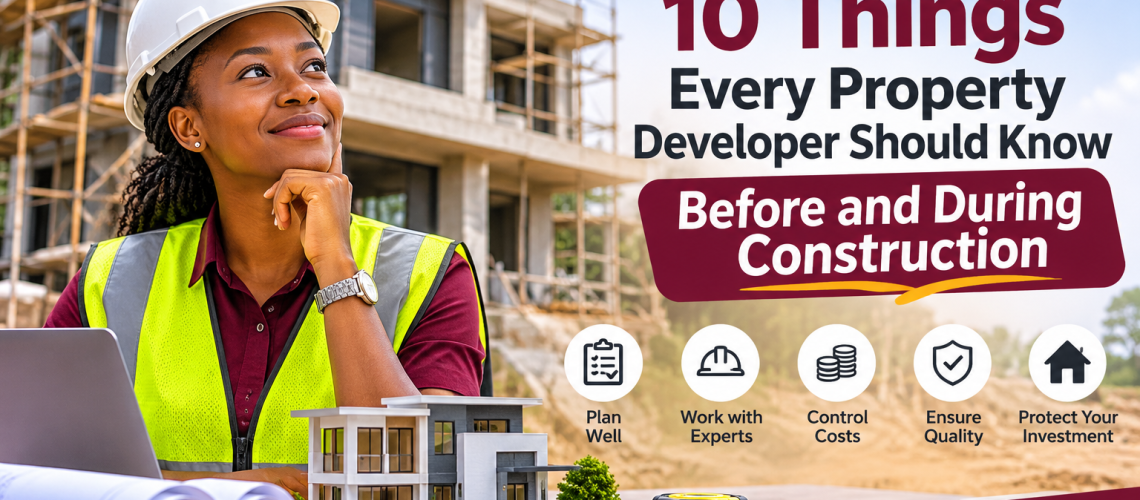
Here are ten important considerations.
1. Conduct Proper Site Investigations Before Construction
Before purchasing construction materials or preparing to break ground, understand the site on which you intend to build.
Site conditions can significantly influence construction costs, structural requirements and the overall feasibility of a project.
Important considerations include:
- Soil conditions and bearing capacity
- Site topography and slope
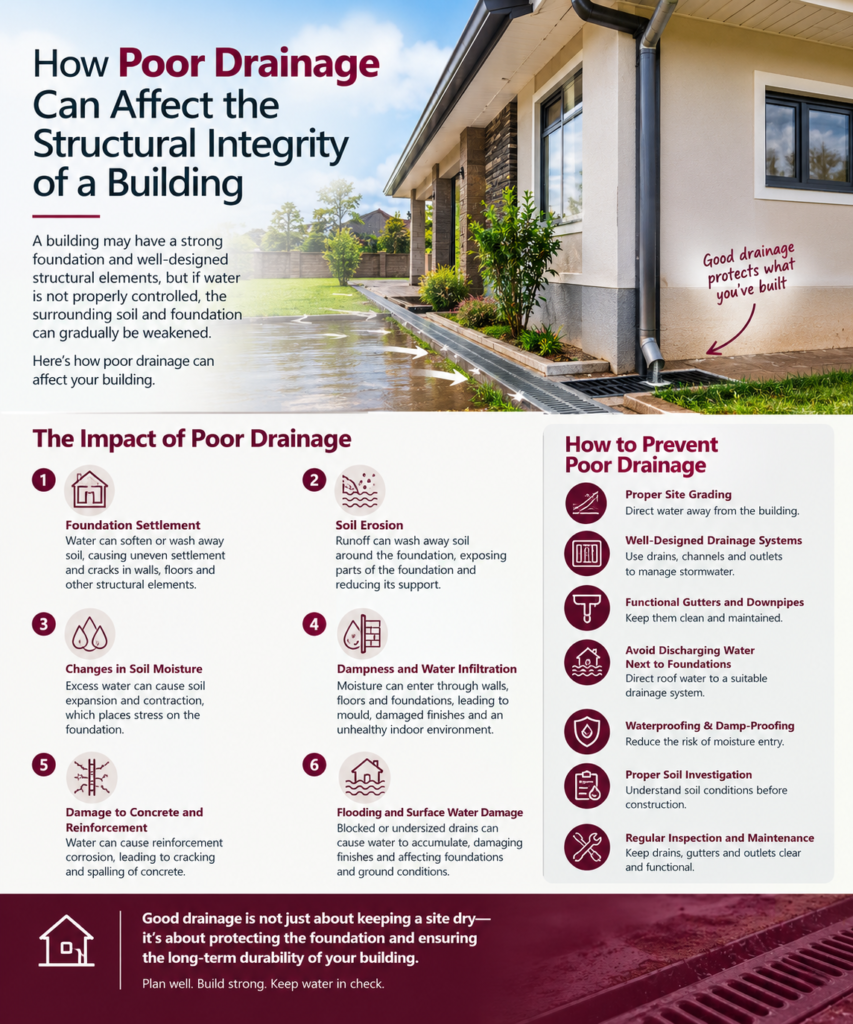
- Drainage patterns
- Accessibility
- Availability of water and electricity
- Proximity to essential social amenities
- Site boundaries and beacons
For example, constructing on expansive black cotton soil may require specialized foundation solutions depending on the findings of the geotechnical investigation and structural design.
Failing to understand these conditions early can result in additional excavation, foundation adjustments, drainage works and other unforeseen expenses.
Proper site investigations help identify potential challenges before they become costly construction problems.
2. Engage Qualified Construction Professionals
A construction project requires different professionals with specialized responsibilities.
Trying to manage every aspect of construction without the appropriate technical expertise can expose your investment to unnecessary risks.
Depending on the project, your professional team may include:
- Architect: Responsible for architectural design and spatial planning.
- Structural Engineer: Designs and oversees structural elements to ensure they meet the required safety and performance standards.
- Quantity Surveyor: Manages construction costs, prepares Bills of Quantities and provides financial advice.
- Services Engineers: Design electrical, mechanical and plumbing installations.
- Contractor: Executes the construction works in accordance with the approved designs and contract requirements.
Each professional contributes to the success of the project.
Their involvement helps ensure that design, structural requirements, costs and construction activities are properly coordinated.
3. Have Complete and Approved Drawings Before Construction
Construction drawings are more than illustrations of what your building should look like. They provide the technical information required to execute the project.
Before construction begins, ensure that the necessary architectural, structural and services drawings are properly developed and coordinated.
Incomplete drawings can create uncertainty on site, resulting in:
- Incorrect measurements
- Conflicting information
- Unplanned design changes
- Construction errors
- Delays
- Additional costs
Additionally, ensure that the necessary statutory approvals are obtained before commencing construction.
Building without the required approvals can expose property owners to enforcement action, penalties and possible demolition orders.
Proper documentation and approvals protect both your investment and your ability to proceed with construction lawfully.
4. Prepare a Detailed Bill of Quantities
One of the most important financial documents in construction is the Bill of Quantities (BOQ).
A BOQ provides a detailed breakdown of the construction works, quantities and descriptions, allowing contractors to price the project systematically.
Without a properly prepared BOQ, clients may struggle to understand what is included in a contractor’s quotation.
A detailed BOQ helps you:
- Establish a realistic construction budget.
- Compare contractor quotations.
- Identify missing work items.
- Understand the cost of individual construction activities.
- Monitor expenditure.
- Assess the financial implications of variations.
It also creates a structured basis for cost control throughout the project.
Remember, knowing the total construction cost is important, but understanding how that cost is distributed is equally important.
5. Choose Your Contractor Carefully
The contractor you engage has a significant influence on the quality, cost and completion of your project.
One common mistake property owner’s make is selecting a contractor based entirely on the lowest quotation.
However, a low price does not automatically mean good value.
Before appointing a contractor, consider:
- Relevant construction experience.
- Previous completed projects.
- Technical and financial capacity.
- Professional references.
- NCA registration and the appropriate category for the works.
- Ability to interpret and execute construction drawings.
- Proposed construction programme.
It is also important to establish whether the contractor has the resources required to execute the project successfully.
A thorough contractor evaluation helps reduce the risk of poor workmanship, abandoned projects, unnecessary delays and financial disputes.
6. Have a Clear Construction Contract
A construction contract establishes the obligations and responsibilities of the parties involved.
It provides a formal framework for managing the relationship between the client and contractor.
A properly prepared contract should address matters such as:
- Scope of work.
- Contract sum.
- Payment terms.
- Construction programme.
- Quality requirements.
- Variations.
- Dispute resolution.
- Defects liability.
- Completion requirements.
For example, imagine a contractor requests additional payment for work that the client believes was already included in the original agreement.
Without clearly defined contractual documents, resolving such disagreements can become difficult.
A properly documented contract helps minimize misunderstandings and provides a reference point when disputes arise.
Never rely entirely on verbal agreements when making significant construction commitments.
7. Monitor Construction Quality at Every Stage
Good construction is not determined by how beautiful a completed building looks.
The quality of the work carried out at different construction stages determines the building’s safety, durability and performance.
Some construction elements become difficult and expensive to inspect or correct once subsequent work has covered them.
This is why professional inspections and supervision are important throughout construction.
Particular attention should be given to:
- Foundation works.
- Reinforcement installation.
- Concrete works.
- Structural elements.
- Waterproofing.
- Plumbing installations.
- Electrical installations.
- Roofing.
- Finishes.
Ensure that inspections and necessary tests are conducted by the appropriate professionals before work progresses to subsequent stages.
Identifying defects early is generally less expensive than correcting them after the building is completed.
8. Maintain Strict Cost Control Throughout Construction
Having a construction budget is one thing. Ensuring that the project stays within that budget is another.
Construction costs can change due to variations, material price fluctuations, unforeseen site conditions and changes in client requirements.
Without proper cost monitoring, these expenses can accumulate and create significant budget overruns.
A Quantity Surveyor helps maintain financial control through activities such as:
- Preparing interim valuations.
- Assessing variations.
- Monitoring project expenditure.
- Preparing cost reports.
- Reviewing contractor claims.
- Forecasting the final project cost.
For example, if a client decides to upgrade the flooring from standard ceramic tiles to premium porcelain tiles, the additional cost should be assessed before the change is implemented.
This allows the client to understand the financial impact and decide whether the upgrade is worth the additional expenditure.
Cost control is not about preventing every change. It is about ensuring that every financial decision is understood and properly managed.
9. Set Aside a Contingency Budget
Even with thorough planning, construction projects can encounter unforeseen circumstances.
These may include unexpected ground conditions, necessary design adjustments or other unforeseen works.
This is why a contingency allowance is an important consideration when preparing a construction budget.
A contingency budget provides financial provision for qualifying unforeseen costs that may arise during the project.
However, it should not be treated as additional money available for unnecessary upgrades or uncontrolled spending.
The appropriate allowance depends on the project’s complexity, design development, site conditions and identified risks.
A Quantity Surveyor can advise on an appropriate contingency provision based on the project’s circumstances.
10. Think Beyond Construction: Consider Long-Term Maintenance
Protecting your investment does not end when the contractor hands over the keys.
A building requires ongoing maintenance to preserve its condition, functionality and value.
When making construction decisions, consider the long-term implications of your material and system choices.
For example:
- Proper waterproofing can help prevent moisture-related damage.
- Suitable roofing materials can reduce premature replacement.
- Durable plumbing components can minimize maintenance interventions.
- Efficient lighting and electrical systems can help manage operational costs.
- Proper drainage can reduce water-related damage around the property.
Choosing materials based only on their initial purchase price can result in higher maintenance and replacement costs later.
This is where life-cycle costing becomes useful. It considers the initial construction cost alongside the expected maintenance, operational and replacement costs over the building’s useful life.
The objective is to achieve long-term value rather than simply the lowest initial construction cost.
The Role of a Quantity Surveyor in Protecting Your Investment
While every construction professional has an important responsibility, the Quantity Surveyor plays a particularly significant role in protecting the financial interests of the client.
From the initial cost estimate to the final account, the QS helps ensure that construction expenditure is properly planned, assessed and monitored.
Some of the key services include:
Cost planning: Establishing realistic project budgets based on the proposed design and construction requirements.
Bill of Quantities preparation: Providing a detailed breakdown of construction work to support pricing and budgeting.
Tender analysis: Evaluating contractor quotations to identify pricing differences, omissions and potential risks.
Contract administration and cost management: Supporting the financial administration of the project in accordance with the agreed contractual arrangements.
Variation assessment: Evaluating the financial implications of proposed changes.
Interim valuations: Assessing the value of work completed to support appropriate payments.
Final account preparation: Establishing the final financial position of the project.
Having a Quantity Surveyor involved from the early stages helps clients make informed financial decisions and reduces the likelihood of avoidable expenditure.
Final Thoughts
Building property is a significant financial commitment, and protecting that investment requires more than choosing a good location or having an attractive architectural design.
It requires a coordinated approach that considers site conditions, professional expertise, approvals, construction quality, contractual obligations and financial management.
Every stage presents decisions that can either protect your investment or expose it to unnecessary risks.
The most successful projects are not necessarily those with the biggest budgets. They are those where resources are properly planned, professional advice is sought and decisions are made with a clear understanding of their financial and technical implications.
Remember, protecting your investment begins long before construction starts and continues long after the building is completed.