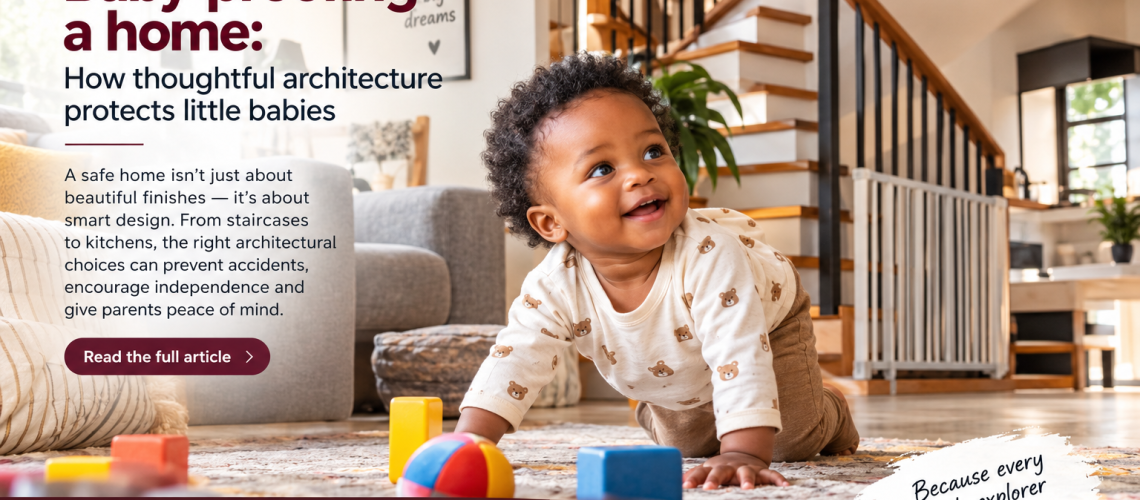

A home should be more than a beautiful structure; it should be a safe environment where every member of the family can live comfortably, especially the youngest ones. For parents with babies and toddlers, everyday spaces can present unexpected challenges. A staircase becomes a climbing adventure, a window becomes a point of curiosity, and a coffee table becomes an obstacle for a child learning to walk. These are ordinary parts of a home, but to a little explorer, they can present real dangers. As an architect, I believe that creating a child-friendly home begins with understanding how children interact with their surroundings and designing spaces that accommodate their curiosity without unnecessarily exposing them to risk.
Baby-proofing is often associated with safety gates, socket covers and cupboard locks, but it goes much deeper than that. It starts with the design decisions made before a house is built. The position of a staircase, the height and design of balcony railings, the type of flooring selected and the way furniture is arranged can all influence how safe a home becomes. In Kenya, where many homes feature maisonettes, tiled floors, balconies, external staircases and open-plan living spaces, these considerations are particularly important. A well-designed home should not only look impressive in photographs; it should also respond to the practical realities of family life.
One of the first areas I would consider is the staircase. As children begin crawling and walking, stairs naturally attract their attention. Properly designed treads, secure handrails, suitable balustrade spacing and securely installed safety gates can help reduce the risk of falls. The same attention should be given to balconies and windows, where suitable guards and restrictors can prevent dangerous openings. Architects should also consider how furniture is positioned around these areas, since a chair or cabinet placed beside a window can unintentionally become a climbing aid. Safety should be incorporated into the design rather than added only after a problem arises.
The living room also deserves careful thought because it is often where children spend much of their time playing and interacting with the family. Sharp furniture corners, unstable television stands, glass surfaces and small decorative objects can introduce avoidable hazards. Choosing stable furniture, securing heavy cabinets and televisions, maintaining clear circulation spaces and creating a comfortable play area can make the room more suitable for children without compromising its appearance. In fact, thoughtful furniture placement and a well-organised layout often improve the functionality of a living room for adults as well as children.
The kitchen and bathroom require equal attention because they contain some of the most serious household hazards. In the kitchen, hot surfaces, sharp utensils, cleaning products and heavy cookware should be kept securely out of children’s reach. Cupboard locks and organised storage can help separate hazardous items from everyday objects. In bathrooms, suitable slip-resistant flooring, secure storage for medicines and chemicals, and careful management of standing water are essential considerations. Electrical installations should also be properly maintained, with suitable socket protection and cables arranged to prevent children from pulling appliances down. These may seem like small details, but they can have a significant impact on how safely a home functions.
Flooring is another important part of the conversation. Many Kenyan homes use ceramic or porcelain tiles because they are durable and easy to maintain, but some finishes can become slippery when wet. Selecting flooring appropriate to the location, especially in bathrooms, kitchens, entrances and outdoor walkways, can help reduce the risk of slips. Uneven surfaces, loose rugs and abrupt changes in floor level should also be addressed. A child spends considerable time close to the ground, crawling, sitting and learning to walk, so the floor deserves as much consideration as the walls, ceilings and finishes that usually attract our attention during design.
Beyond the interior, the compound must also be considered part of the child’s environment. Boundary gates, external staircases, parking areas, drainage channels, gardens and water storage facilities can all present risks if they are not properly managed. Secure boundaries, suitable barriers around hazardous areas, well-maintained pathways and safe access arrangements can help make the outdoor environment more suitable for family use. In homes where space is limited, thoughtful planning becomes even more important because children and vehicles, visitors and household activities may share the same compound.
It is equally important to understand that baby-proofing is not a once-off exercise. As children grow, their abilities change, and so do the risks around them. A baby who cannot yet move independently may soon become a toddler who can open drawers, climb onto furniture and reach objects that were previously inaccessible. Parents should regularly review each room, looking at the environment from a child’s perspective and identifying anything that can be pulled, climbed, swallowed or knocked over. Safety devices should be checked frequently, and adult supervision remains essential regardless of how carefully a home has been arranged.
Ultimately, baby-proofing reminds us that architecture is about much more than drawings, finishes and impressive facades. It is about understanding the people who will occupy a space and anticipating their needs at different stages of life. For architects, this means considering safety from the earliest stages of planning and making informed decisions about circulation, materials, openings, storage and furniture layouts. For homeowners, it means recognising that creating a safer environment does not always require a major renovation; sometimes, a few well-considered changes can make a meaningful difference.
A truly well-designed home is not simply one that looks beautiful when it is completed. It is one that continues to serve its occupants safely, comfortably and practically as their lives change. When we design with children in mind, we create more than safer rooms; we create environments where little explorers can discover the world with greater freedom, while parents enjoy greater peace of mind. After all, the best architectural designs do not just provide a place to live; they help families thrive.
By Kelvin Munyoro
Assistant Architect DKB