
Why Foundation Design Is Critical to Building Safely
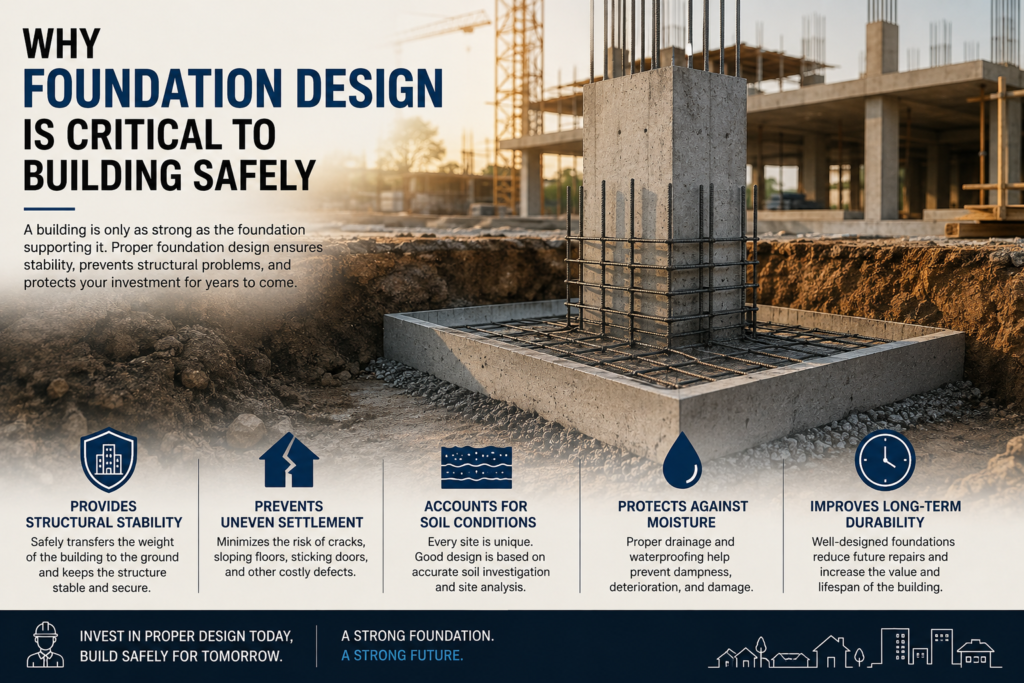
A beautiful house can hide a serious problem beneath it.
When we look at a completed building, we notice the finishes, the windows, the roof, and the overall design. But one of the most important parts of that building is something we rarely see: the foundation.
The foundation carries the weight of everything above it and transfers that load safely into the ground. But not every site has the same soil, groundwater conditions, or structural requirements. This is why foundation design should never be based on guesswork or simply copying what worked on another project.
From soil conditions and building loads to drainage and settlement, several factors must be considered before construction begins.
Because when it comes to building safely, what happens beneath the ground matters just as much as what we see above it.
Read more on this in this article.
Foundation Failure as a Common Structural Problem in Buildings and How to Prevent It
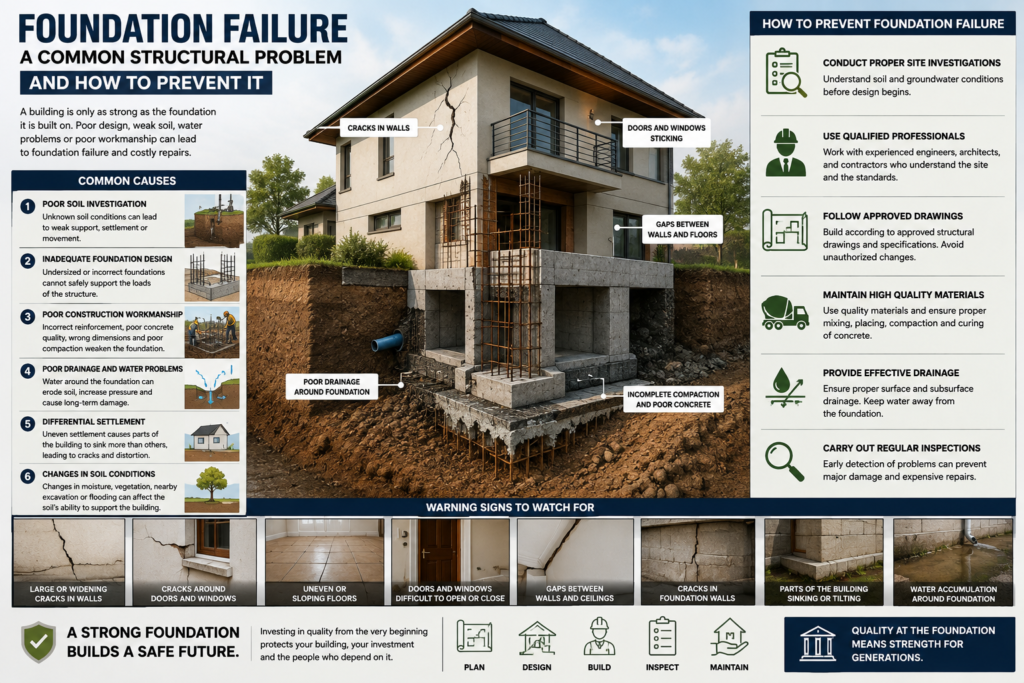
A building can look perfect from the outside, but what happens when the problem starts beneath your feet?
The foundation carries the weight of everything built above it, yet it is often one of the stages where shortcuts are taken. Poor soil investigation, inadequate design, poor workmanship, water problems, and changing ground conditions can gradually turn into cracks, uneven floors, and serious structural damage.
The good news? Many foundation problems can be prevented before they begin.
This article explores the common causes of foundation failure, the warning signs every property owner should know, and the practical steps that can help create a stronger, safer and more durable building.