
Last week, I travelled outside Nairobi to visit clients in Nyandarua and Kericho counties. I cannot deny that I enjoyed the road trip, even though it was work related. But the farther I travelled, the more worried I became about how our countryside is changing.
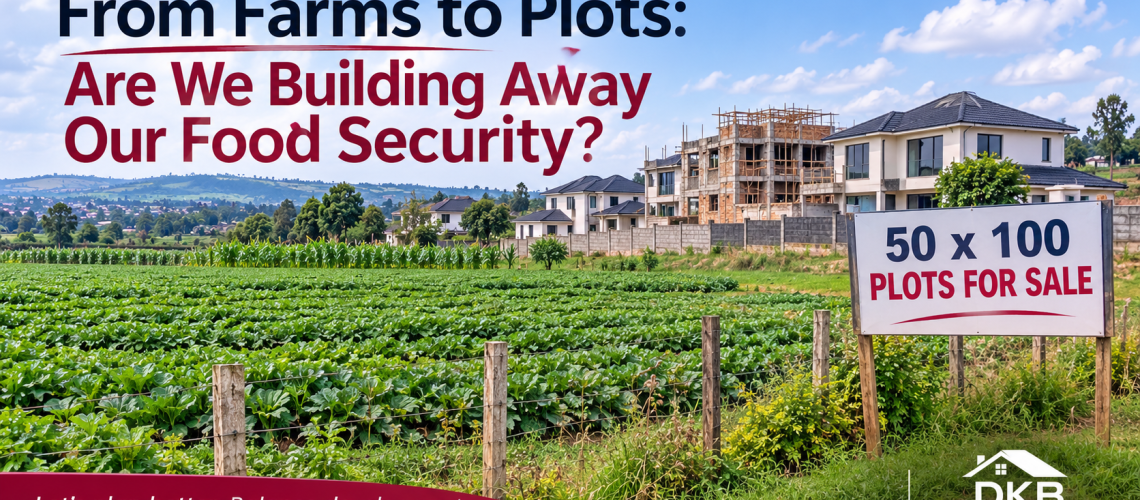
It started around Limuru. The green tea plantations whose views I once enjoyed are slowly giving way to concrete buildings. Along the Flyover–Njabini–Kipipiri route, I kept looking for the large farms of potatoes, cabbages and peas(miji) that once defined the beauty of Nyandarua. The open grazing fields, too, seemed fewer. In their place were small fenced subdivisions and signs advertising “50 by 100 plots for sale.”
As I crossed Nakuru County, I noticed the same pattern. In Kericho, I could see buildings appearing within the tea-growing landscape. The farms that produce one of our proudest cash crops seemed to be shrinking, alongside the grazing fields.
Then came the uncomfortable irony: I was travelling there for a construction project made possible by the very subdivisions that worried me.
As a construction professional, this made me question my own role. We help people build homes and investments, but are we giving enough thought to the farmland we lose in the process? If every productive farm becomes a collection of plots, where will we grow our food?
I even found myself wondering whether we would one day turn to GMOs out of desperation. But whatever crops we grow, we will still need land, water and proper planning. Technology alone cannot replace the farmland we keep building over.
These questions also brought me back to our county planning authorities. How seriously are we taking land-use planning? We have the Physical and Land Use Planning Act, 2019, but how much does it guide the development we see on the ground? When subdivisions and developments are considered, how much weight is given to food production and the needs of future generations? Is revenue taking priority over the long-term consequences?
As builders, we also have questions to answer. Can we design developments that use less land, make better use of already developed areas, and adopt more sustainable materials and construction methods? Are our clients willing to embrace these choices, and are we doing enough to explain their value?
We need homes, businesses and infrastructure. We also need productive farms and food on our tables. Good planning must make room for all of them.
The future is taking shape in the decisions we make today. One subdivision, one approval and one building at a time. We must ask ourselves whether we are building a country that will still be able to feed itself.