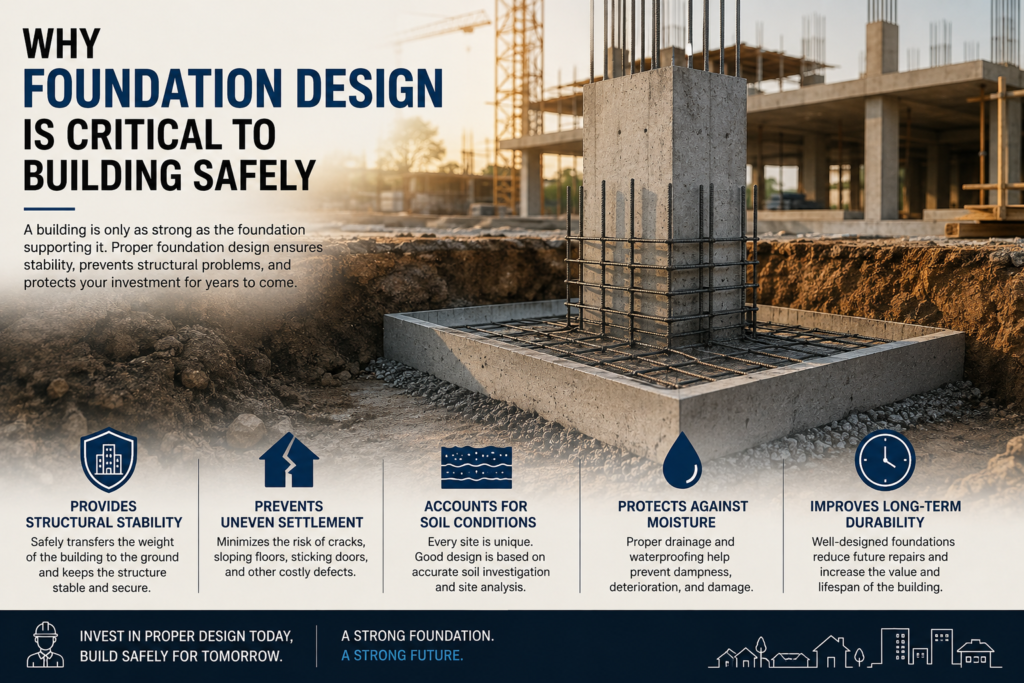

When people think about the strength of a building, they often focus on the foundation, columns, beams and quality of materials used during construction. But there is another factor that can have a major impact on how well a building performs over time: drainage.
A building can have a properly designed foundation and strong structural elements, but if rainwater and surface water are not properly controlled, the surrounding soil and foundation can eventually be affected.
Poor drainage may not cause problems overnight. In many cases, the damage develops gradually, making it easy to overlook until cracks, dampness, settlement or other signs become visible.
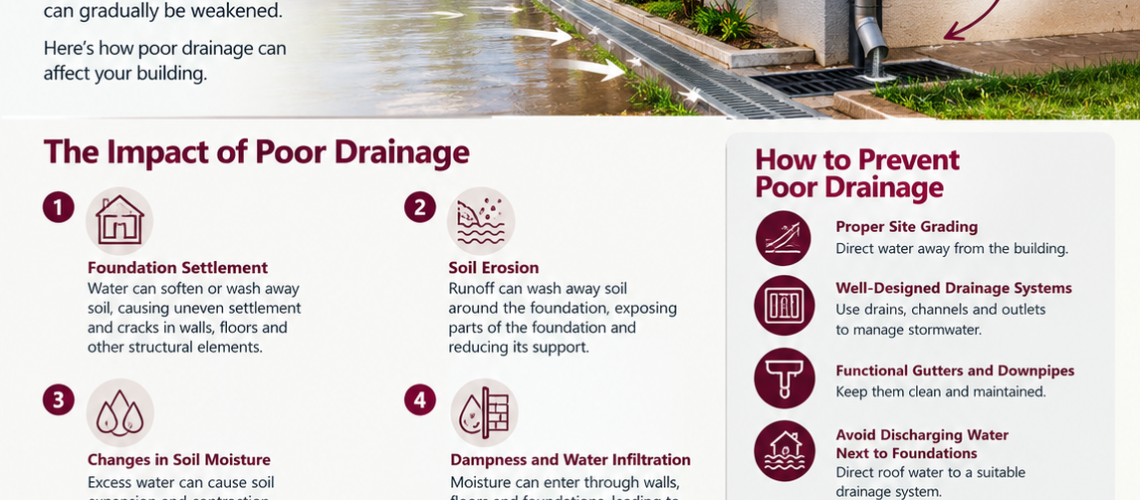
Here are some of the ways poor drainage can affect a building.
1. Foundation Settlement
Water accumulating around a building can change the condition of the soil supporting the foundation. Depending on the soil type, excessive water may soften the ground, wash away soil particles or reduce the soil’s ability to support the building.
This can contribute to uneven foundation settlement, which may result in cracks in walls, floors and other parts of the building.
The risk can be particularly important on sites with problematic soils, making proper drainage and soil investigation essential before construction begins.
2. Soil Erosion Around the Foundation
Uncontrolled rainwater runoff can gradually erode the soil surrounding a building.
If roof water or surface runoff is allowed to flow directly next to the foundation, it can wash away soil over time. In severe cases, this may expose parts of the foundation and reduce the stability of the surrounding ground.
Proper site grading and stormwater management help direct water away from vulnerable areas.
3. Changes in Soil Moisture
Different soils respond differently to water.
Some soils can expand when they absorb water and shrink when they dry out. Repeated cycles of wetting and drying can cause movement in the ground, which may place additional stress on foundations.
This is why understanding the soil conditions of a site is important before deciding on the foundation and drainage approach.
4. Dampness and Water Infiltration
Poor drainage can allow water to remain around walls and foundations for extended periods.
Water may eventually find its way through cracks, joints or other vulnerable areas, resulting in damp walls, wet floors and water infiltration.
Persistent moisture can also encourage mould growth, damage finishes and create an unhealthy indoor environment.
Proper damp-proofing, waterproofing and drainage should therefore work together to keep unwanted moisture away from the building.
5. Corrosion of Reinforcement
Concrete provides protection to the steel reinforcement embedded within it. However, prolonged exposure to moisture can contribute to conditions that allow reinforcement corrosion to occur, particularly where concrete is cracked or otherwise compromised.
As reinforcement corrodes, it can expand and create pressure within the surrounding concrete. This may lead to cracking, delamination and spalling.
Over time, this can affect the durability of reinforced concrete elements and increase maintenance requirements.
6. Flooding and Surface Water Damage
During periods of heavy rainfall, blocked, poorly positioned or undersized drainage systems can cause water to accumulate around a building.
Apart from damaging finishes, landscaping and external works, prolonged water accumulation can alter surrounding ground conditions and increase the risk of water reaching foundations.
A drainage system should therefore be designed to handle the expected volume of stormwater for the site rather than simply providing somewhere for water to flow.
How Can Poor Drainage Be Prevented?
Good drainage begins during the planning and design stage. Some important measures include:
Proper Site Grading
The site should be appropriately graded so that surface water flows away from the building rather than accumulating around the foundation.
Well-Designed Stormwater Drainage
Provide suitable drains, channels and stormwater outlets to safely collect and discharge rainwater.
Functional Gutters and Downpipes
Roof water should be collected and directed to appropriate discharge points. Gutters and downpipes should also be cleaned and maintained regularly.
Avoid Discharging Water Next to Foundations
Roof runoff should not simply be released beside the building. Water should be directed to a suitable drainage or stormwater management system.
Waterproofing and Damp-Proofing
Appropriate waterproofing and damp-proofing measures should be incorporated where required to reduce the risk of moisture entering the building.
Proper Soil Investigation
Understanding the soil conditions before construction can help the design team determine appropriate foundation and drainage solutions for the site.
Regular Inspection and Maintenance
Even a well-designed drainage system can become ineffective if it is blocked or damaged. Gutters, drains, channels and outlets should therefore be inspected and maintained regularly.
Don’t Wait for Cracks to Take Drainage Seriously
One of the biggest mistakes property owners can make is treating drainage as an afterthought.
Water may appear harmless, but when it is poorly controlled around a building, it can gradually affect the soil, foundations, concrete and other building elements.
Good drainage is therefore not simply about keeping a compound dry. It is part of protecting the foundation, preserving the building and improving its long-term durability.
From site investigation and design to construction and maintenance, proper planning can help reduce the risks associated with uncontrolled water.
A strong building needs more than a good foundation. It also needs the right conditions around that foundation.