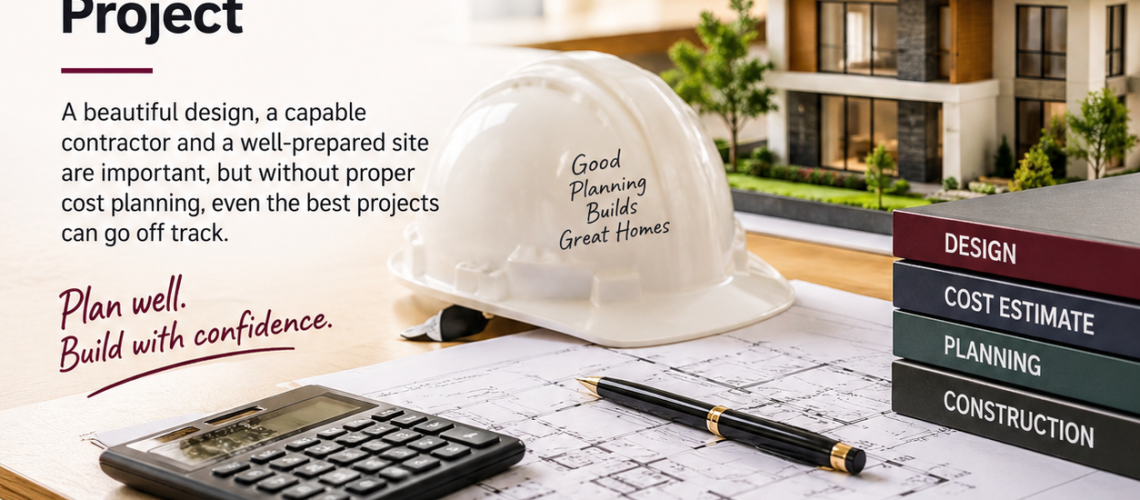

A construction project can have a beautiful design, a capable contractor and a well-prepared site, yet still run into serious problems if the costs are not properly planned.
Many clients think of construction budgeting as simply deciding how much money they have available and then finding a contractor who can build within that amount.
In reality, cost planning starts long before construction begins.
It involves understanding the project requirements, developing realistic cost estimates, testing the design against the available budget and continuously monitoring costs as the project progresses.
For homeowners and property developers, proper cost planning can make the difference between a project that remains financially controlled and one that is constantly affected by unexpected costs.
What Is Cost Planning in Construction?
Cost planning is the process of estimating, allocating and monitoring the costs of a construction project from the early design stages through to completion.
It is not simply about finding the cheapest materials or reducing the construction budget.
The objective is to establish a realistic budget and make sure the proposed design and construction requirements remain financially achievable.
A Quantity Surveyor plays an important role in this process by providing professional cost advice at different stages of the project.
Cost Planning Starts Before Construction
One of the most expensive mistakes a client can make is waiting until construction starts to think seriously about costs.
By the time construction begins, many major decisions have already been made.
The size of the building, structural system, finishes, number of rooms, windows, roofing system and other design elements can all influence the final cost.
This means the best time to manage costs is before money is committed to construction.
At the early stages, changes to the design are generally easier and less expensive to make than changes made after construction has started.
Your Design Has a Direct Impact on Cost
A building design is not just a visual concept.
Every design decision has a cost implication.
For example, increasing the floor area means additional costs for:
- Foundations
- Structural elements
- Walls
- Roofing
- Floor finishes
- Doors and windows
- Electrical installations
- Plumbing
- Painting
- External works
Even seemingly small design changes can affect several sections of the project.
This is why cost planning should happen alongside the development of the design.
Instead of designing first and asking about the cost later, the design and budget should be considered together.
Setting a Realistic Construction Budget
A construction budget should be based on the actual requirements of the project rather than an arbitrary figure.
For example, saying:
“I have KSh 10 million, so build me a house for KSh 10 million.”
does not automatically make the project feasible.
The budget needs to be tested against factors such as:
- Floor area
- Location
- Site conditions
- Building design
- Structural requirements
- Level of finishes
- Services
- External works
- Current market conditions
- Professional and statutory costs
A Quantity Surveyor can assess the proposed project and provide early cost advice to determine whether the client’s expectations are aligned with the available budget.
Cost Planning Helps Control Design Changes
Clients often make changes during construction.
Perhaps the kitchen needs to be larger, a bedroom is relocated or a different type of finish is selected.
Changes are sometimes necessary, but they can become expensive when they happen after work has already started.
A design change may affect several other components.
For example, moving a wall could affect:
- Floor finishes
- Ceiling layouts
- Electrical points
- Plumbing
- Doors
- Windows
- Structural elements
- Painting
Proper cost planning encourages clients to consider the financial implications of design decisions before they become construction changes.
Cost Planning Is Not About Cutting Costs
There is an important difference between cost planning and cost cutting.
Cost cutting focuses on reducing expenditure.
Cost planning focuses on achieving the required project objectives within an appropriate budget.
Sometimes spending more in one area can actually provide better value in the long term.
For example, selecting a durable material may have a higher initial cost but lower maintenance requirements.
Similarly, a design adjustment may slightly increase construction costs but improve the building’s functionality.
The objective is therefore not simply to make the project as cheap as possible.
It is to achieve the right balance between cost, quality, function and performance.
Monitoring Costs During Construction
Cost planning should not stop when the contractor moves onto the site.
The budget needs to be monitored throughout construction.
This can involve tracking:
- Work completed
- Payments
- Variations
- Material costs
- Contract commitments
- Remaining budget
- Projected final cost
Without ongoing monitoring, a project can gradually move beyond its original budget without the client realizing how serious the difference has become.
Regular cost reporting gives the client a clearer picture of the project’s financial position.
The Role of Variations in Cost Control
Variations are changes to the original scope of work.
They can arise because of:
- Client instructions
- Design changes
- Unforeseen site conditions
- Omissions in the original scope
- Changes in specifications
Not every variation can be avoided.
However, the financial impact should be assessed before the work is undertaken whenever possible.
A Quantity Surveyor can evaluate the cost of a proposed variation and advise the client on its impact on the overall project budget.
This allows the client to make an informed decision rather than discovering the financial consequences later.
Cost Planning Helps with Cash Flow
Having enough money to complete a project is not only about knowing the total construction cost.
Timing also matters.
Construction expenditure happens progressively.
A client may need significant funds at different stages for materials, labour, subcontractors and other project expenses.
Cost planning and cash flow forecasting help the client understand when funds are likely to be required.
This is particularly important for developers who may be coordinating construction expenditure with financing arrangements, sales or expected rental income.
What Happens When Cost Planning Is Ignored?
Without proper cost planning, several problems can arise.
A project may experience:
Budget overruns
The actual cost exceeds what the client originally expected.
Frequent design changes
The client discovers that certain elements are unaffordable after the design has already progressed.
Unplanned variations
Changes during construction increase the contract sum.
Delayed completion
Insufficient funds can slow down or stop construction.
Compromised quality
A client may be forced to make rushed material or specification changes simply to keep the project within the remaining budget.
Financial pressure
Additional borrowing or finding emergency funds may become necessary.
These problems are often connected.
A small budgeting issue at the beginning can become a much larger financial problem later.
How a Quantity Surveyor Supports Cost Planning
A Quantity Surveyor provides cost advice throughout the project lifecycle.
Depending on the project, this can include:
- Preliminary cost estimates
- Cost planning
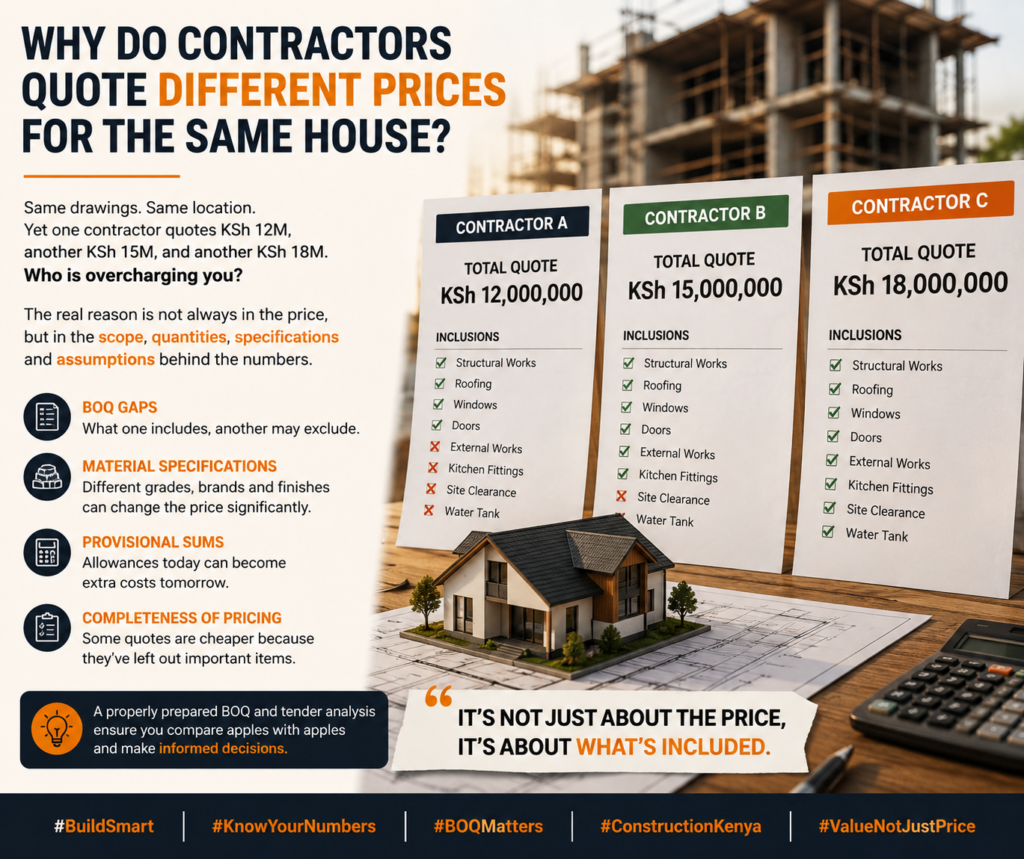
- Bills of Quantities
- Tender documentation
- Tender analysis
- Contractor valuation
- Variation assessment
- Cost reporting
- Cash flow forecasting
- Final account preparation
The QS helps connect the design decisions with their financial consequences.
This gives the client better information before making important financial commitments.
A Simple Example
Imagine a homeowner plans to build a 300 m² house.
During the early design stage, the estimated construction cost is above the homeowner’s available budget.
There are two possible approaches.
The first is to continue with the design and start construction, hoping that costs will somehow fit within the budget.
The second is to review the design before construction and identify areas where the project can be adjusted without compromising the homeowner’s key requirements.
The design may be optimized, unnecessary complexity reduced or specifications reviewed.
The important point is that these decisions are made before construction, when changes are easier to implement.
That is the value of cost planning.
Cost Planning Should Be Part of the Design Process
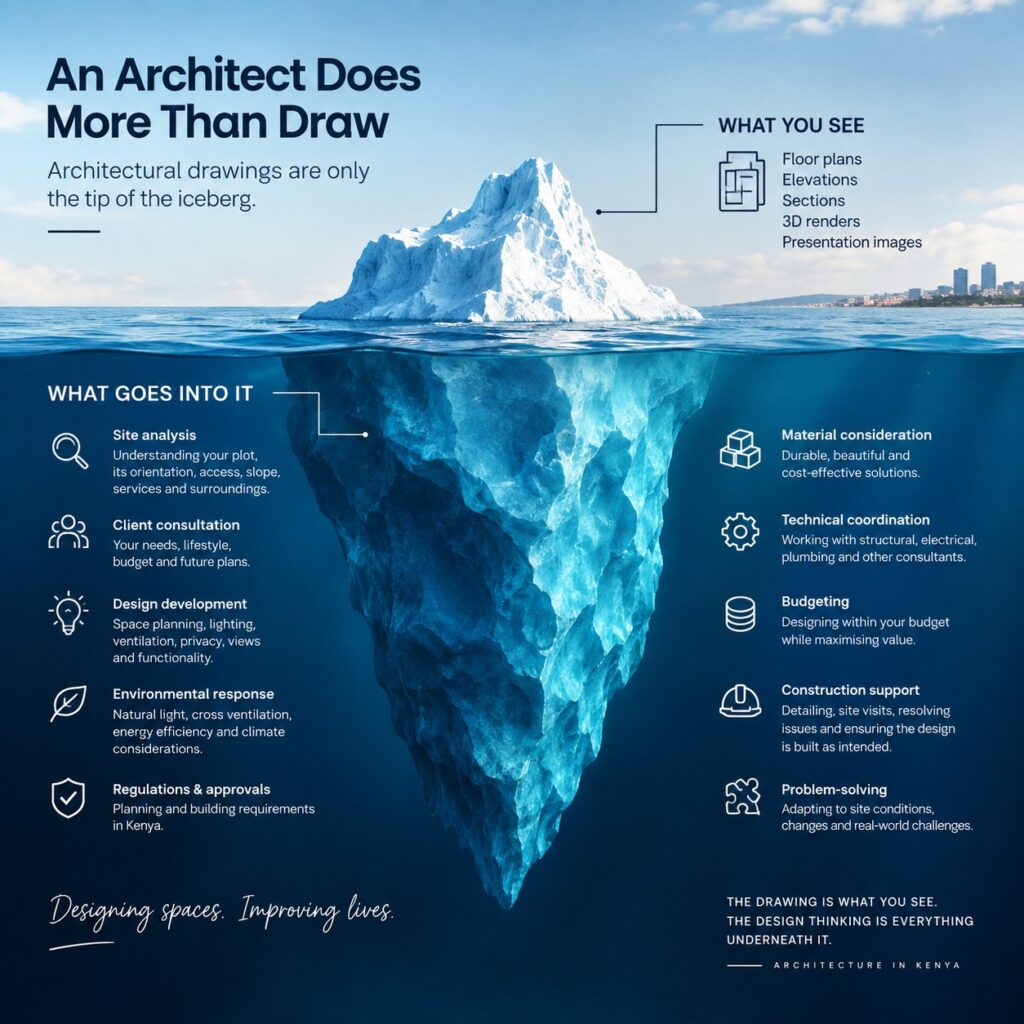
A successful construction project requires more than good drawings.
It requires coordination between design, cost, time and construction.
When cost planning is introduced early, the client can make decisions based on actual financial information rather than assumptions.
This also creates a more realistic foundation for contractor procurement and project management.
Final Thoughts
Construction costs do not suddenly appear when the contractor arrives on site.
They are influenced by decisions made throughout the project—from the size and complexity of the design to the materials, finishes, construction methods and changes introduced along the way.
This is why cost planning should begin at the earliest stages and continue throughout construction.
For homeowners and developers, the goal is not simply to know how much a building cost.
It is to understand why it costs that much, where the money is going and how today’s decisions could affect tomorrow’s budget.
A well-planned construction budget gives a project direction.
And when cost, design and construction are managed together, the chances of keeping the project financially under control are significantly improved.