
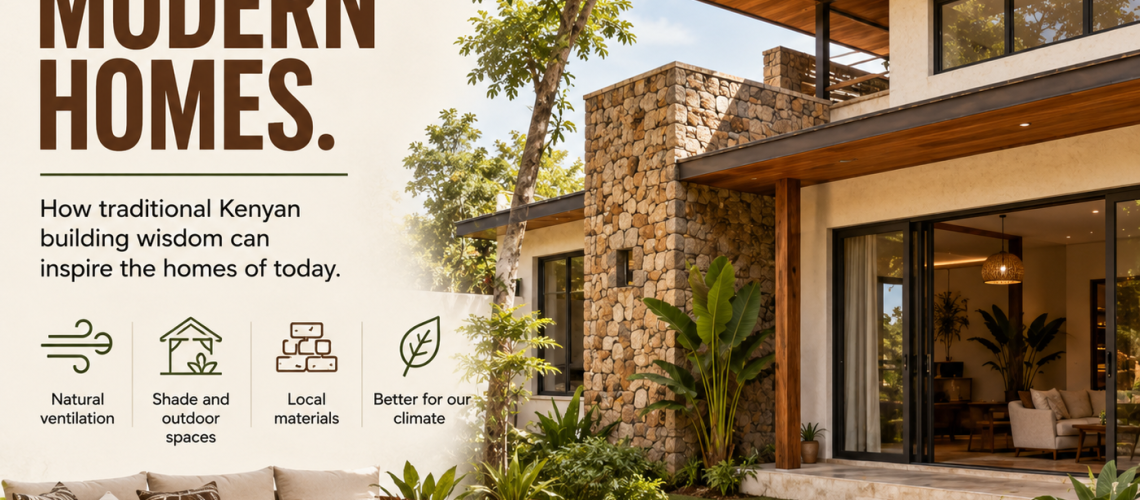

Modern Kenyan architecture is rapidly evolving. Clean lines, large windows, open-plan interiors, flat and low-pitched roofs, and minimalist finishes have become increasingly popular in contemporary residential design. However, as homeowners and designers embrace modern aesthetics, there is an opportunity to look back at an often-overlooked source of architectural knowledge: vernacular architecture in Kenya. Long before modern building technologies, air conditioning and advanced construction systems, local communities developed buildings that responded naturally to climate, available materials, culture and everyday life. These principles remain relevant today and can provide valuable inspiration for creating sustainable, comfortable and distinctly Kenyan homes.
Vernacular architecture is not simply about preserving the appearance of traditional buildings. It is about understanding the reasoning behind them. Traditional buildings were often designed around their environment, making use of natural ventilation, shading, locally available materials and carefully considered spatial arrangements. These principles can be adapted to contemporary lifestyles without sacrificing modern aesthetics. A modern Kenyan home, for example, can incorporate large glazed openings for natural daylight and views while using deep roof overhangs, verandas and external screens to control excessive solar heat. Carefully positioned windows can also encourage cross-ventilation, allowing fresh air to move naturally through the house and improving indoor comfort.
The use of local building materials is another important lesson from traditional architecture. Stone, timber, earth and other locally available materials have long been part of construction across different parts of Kenya. Rather than viewing these materials as old-fashioned, contemporary architecture can reinterpret them in sophisticated ways. Natural stone can become a striking feature wall or façade treatment, while timber can be introduced through ceilings, screens, doors and architectural details. Earth-inspired finishes can also add warmth and texture to minimalist interiors. When combined with modern materials such as concrete, steel and glass, these elements can create homes that feel contemporary while maintaining a strong connection to their surroundings.
Traditional spatial planning also offers valuable ideas for modern residential architecture. The courtyard, for instance, can be reimagined as a landscaped internal garden, outdoor lounge or private retreat. It can introduce natural light and ventilation while creating a stronger relationship between indoor and outdoor spaces. Similarly, the traditional veranda can become a modern outdoor living area where residents can relax, entertain guests and enjoy the surrounding landscape. With appropriate shading, comfortable furniture, lighting and landscaping, these transitional spaces can become an important extension of the home rather than simply serving as circulation areas.
These approaches are particularly relevant to sustainable architecture in Kenya, where designing for the local climate can help improve comfort and reduce unnecessary dependence on mechanical systems. Passive design strategies such as building orientation, natural ventilation, solar shading, appropriate window placement and careful material selection can be considered from the earliest stages of the design process. Instead of designing a building first and attempting to solve environmental problems later, architects can allow the climate and site conditions to influence the building’s form and layout from the beginning.
However, reviving vernacular principles does not mean returning to traditional houses or rejecting modern construction technology. Contemporary architecture can successfully combine local wisdom with modern materials, construction methods and technology. Solar energy, energy-efficient lighting, modern plumbing, high-performance glazing and smart-home systems can work alongside passive design principles and locally inspired materials. The objective is not to choose between traditional and modern architecture, but to understand how the two can complement each other.
This approach can also help strengthen the identity of contemporary African architecture. As cities become increasingly influenced by global architectural trends, houses can sometimes begin to look similar regardless of their location. A modern Kenyan home does not have to follow international trends without considering its context. It can have minimalist forms and sophisticated interiors while incorporating natural stone, timber, shaded courtyards, deep roof overhangs, indigenous landscaping and climate-responsive planning.
Ultimately, the future of modern Kenyan homes should not be about choosing between the past and the future. Vernacular architecture gives us valuable lessons about climate, materials, outdoor living and the relationship between buildings and their environment, while modern architecture provides the technology and construction systems to reinterpret those lessons for today’s lifestyles. By bringing the two together, architects can create homes that are not only visually appealing but also comfortable, sustainable and connected to their location.
By Kelvin Munyoro
Assistant Architect DKB