
The recent flooding in Nairobi has once again highlighted the vulnerability of many homes and neighborhoods to extreme weather events. Heavy rainfall overwhelmed drainage systems, flooded roads, and caused significant property damage across several parts of the city. For architects and urban planners, these events are a reminder that the way we design and position our buildings plays a crucial role in how well they withstand environmental challenges.
One of the most effective strategies for reducing flood damage in residential architecture is elevating houses above ground level. While this may seem like a simple design choice, it has far-reaching benefits for the safety, durability, and resilience of homes, especially in cities like Nairobi where rapid urban development often occurs in areas with limited drainage infrastructure.
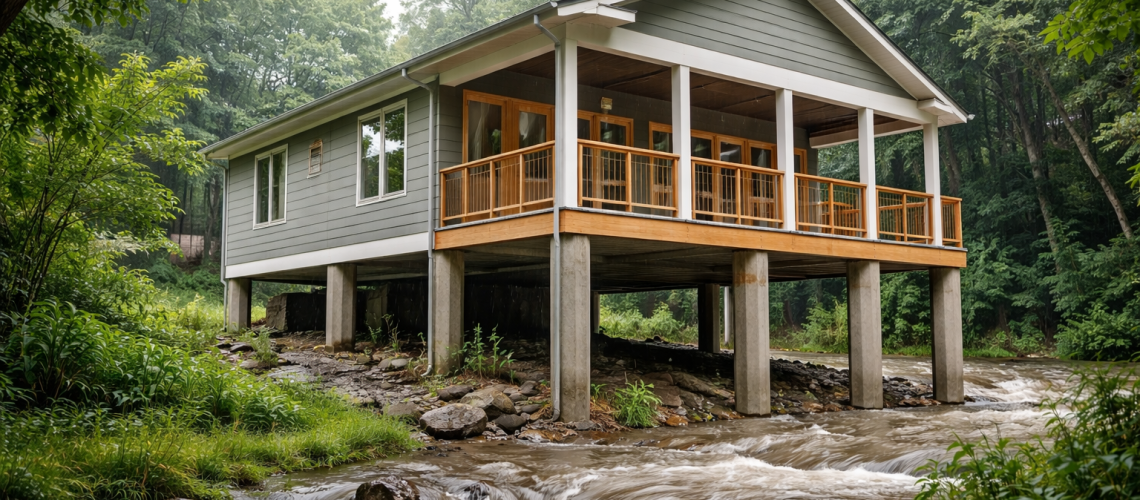
Elevating a house means raising the main living floor above the natural ground level using techniques such as raised foundations, piers, or elevated slabs. This architectural approach creates a protective barrier between the structure and rising floodwaters. During the recent floods in Nairobi, many homes built directly at ground level experienced water entering living spaces, damaging floors, furniture, electrical systems, and wall finishes. If these homes had been elevated even slightly above ground level, the impact of floodwater could have been significantly reduced.
From a structural perspective, elevation also protects the foundation of a building. Floodwater can erode soil, weaken foundations, and cause long-term structural instability. When a house is elevated, architects can design stronger foundation systems that are less vulnerable to water damage and soil movement. This improves the longevity of the building and reduces the likelihood of costly repairs over time.
Another important advantage of elevating homes is improved drainage around the property. Nairobi’s flooding has been exacerbated by poor drainage infrastructure and blocked stormwater channels. When a house is slightly elevated, architects can shape the surrounding land so that water naturally flows away from the building rather than collecting around the foundation. Proper grading combined with elevation helps prevent water pooling and reduces the pressure that floodwater places on structures.
Elevated houses also contribute to better moisture control and ventilation. When buildings are lifted above ground level, air can circulate beneath the structure, helping to reduce dampness and humidity. This is particularly beneficial in areas that experience frequent rainfall, as it minimizes the risk of mold growth and material deterioration.
The recent floods have also sparked broader conversations about climate resilience in urban design. As weather patterns become more unpredictable and extreme rainfall events become more common, architects must adopt building strategies that anticipate these risks. Elevating houses is one of the simplest yet most effective ways to make homes more resilient to flooding and environmental stress.
Ultimately, the flooding experienced in Nairobi serves as an important lesson for homeowners, developers, and policymakers. Architecture is not only about aesthetics or functionality; it is also about responding to the environment and protecting the people who occupy these spaces. By incorporating elevation into residential design, architects can help create homes that are better prepared to withstand flooding and other climate-related challenges.
In a rapidly growing city like Nairobi, where infrastructure sometimes struggles to keep pace with development, thoughtful architectural solutions such as house elevation can make a significant difference. Even a modest increase in a building’s height above ground level can protect property, reduce damage, and improve the long-term resilience of communities facing increasingly frequent flooding.
By Kelvin Munyoro
Assistant Architect BKB