
An Architect Does More Than Draw: Why Architectural Drawings Are Only the Tip of the Iceberg

When you ask an architect, “How much do you charge for the drawings?” you may be looking at only a small part of what you are actually paying for.
In Kenya, architectural drawings are often seen as the main product of an architect’s work. But before the first line is drawn, a lot is happening behind the scenes: site analysis, space planning, client needs, functionality, natural lighting, ventilation, privacy, budget considerations, building regulations, and coordination with other professionals.
A beautiful floor plan is not enough if the house is difficult to use, poorly ventilated, or too expensive to build.
So, what are you really paying an architect for?
In this article, we explore the value of architectural design, what happens before and after the drawings are produced, and why good architecture is about much more than putting rooms on paper.
Because the drawing is what you see. The design thinking is everything underneath it.
Vernacular Meets Modern: Reviving Local Building Wisdom in Contemporary Kenyan Homes

Kenyan architecture is becoming increasingly modern, but in our pursuit of contemporary design, are we overlooking lessons that our traditional buildings have understood for generations? From natural ventilation and shaded outdoor spaces to locally sourced materials and climate-responsive design, vernacular architecture offers principles that remain surprisingly relevant today. This article explores how the wisdom of traditional Kenyan architecture can be reinterpreted through modern design to create homes that are contemporary, comfortable, sustainable, and deeply connected to their surroundings.
The Future of Construction: Are We Ready for the AI and Robotics Age?

A few weeks ago, a client walked into my office with an entire construction brief generated almost entirely by artificial intelligence. Layouts, 3D visuals, cost projections and even an execution plan were already on his screen. I found myself asking a question that many professionals in the built environment may soon have to confront: What happens to our roles when technology can perform tasks that once required years of training and experience?As AI and robotics continue to reshape how we design, plan and build, the future of construction may not be about machines replacing professionals, but about professionals learning how to work alongside them. The question is, are we ready?
Designing for Kenya’s Climate: Passive Cooling Strategies That Can Cut Your Energy Bills
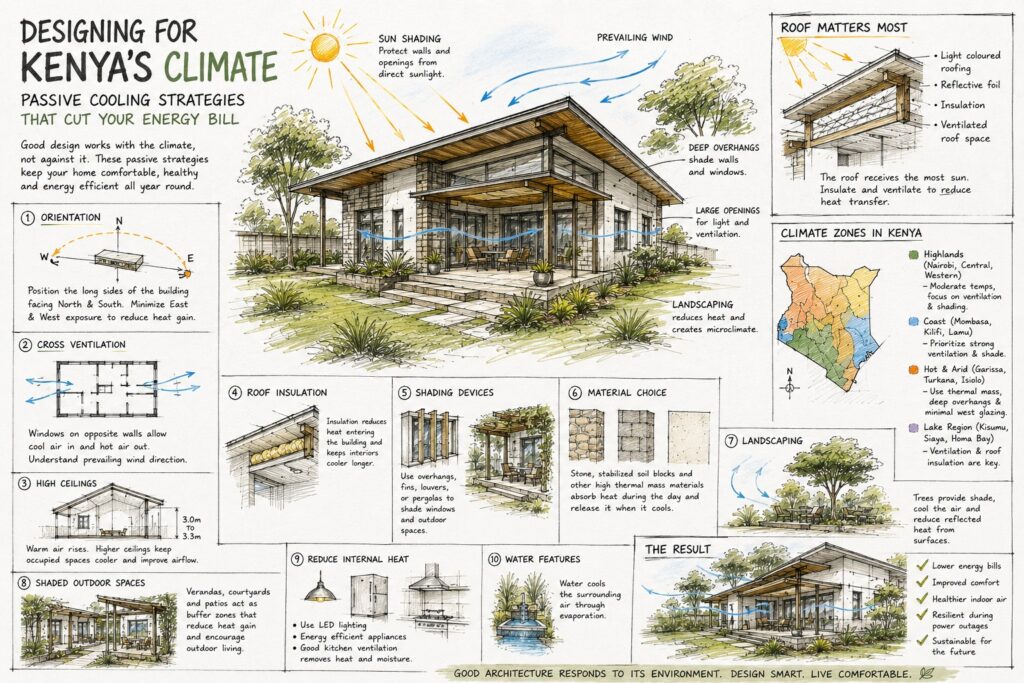
What if the secret to a cooler home wasn’t an air conditioner, but the design itself?
As electricity costs continue to rise across Kenya, many homeowners are searching for ways to keep their homes comfortable without increasing their monthly bills. Yet one of the most effective solutions is often overlooked. It begins long before the roof is installed or the walls are painted. It begins at the design stage.
From the orientation of a building to natural ventilation, roofing, materials, and landscaping, every design decision influences how a home responds to heat. This article explores how passive cooling strategies can help homeowners create spaces that are naturally cooler, more energy-efficient, and better suited to Kenya’s diverse climate.
The Hidden Cost of Change Orders Mid-Build: How One Decision Can Impact an Entire Construction Budget.
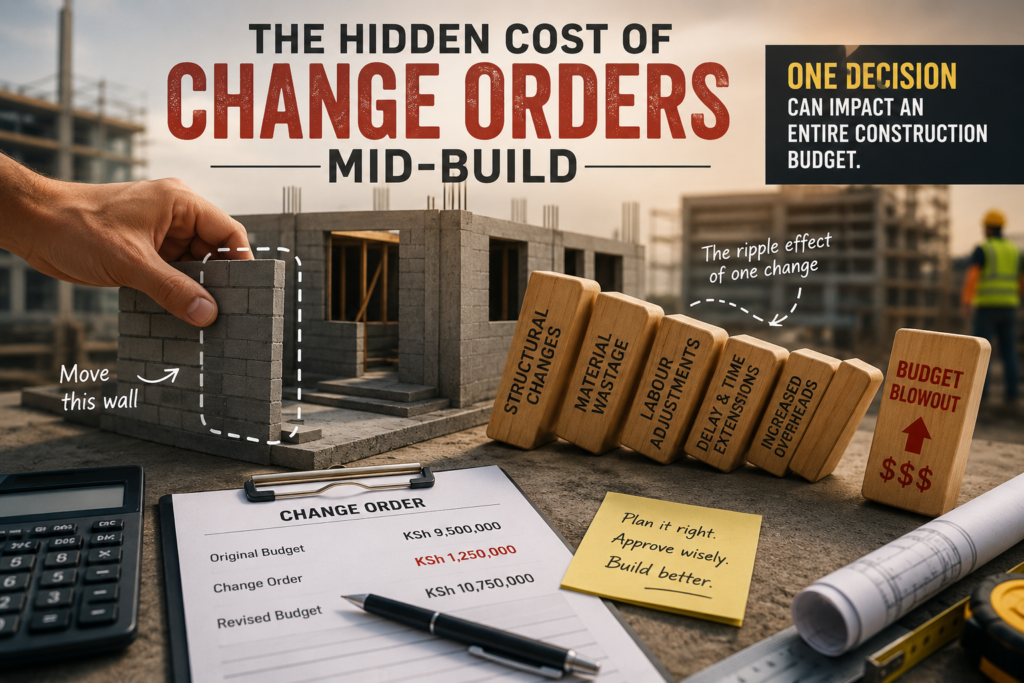
The wall was moved by one meter. The budget moved by hundreds of thousands. This is the hidden math behind construction change orders, and how a Quantity Surveyor prevents it from catching you off guard.
Stay Informed and Build with Confidence.
When developments are demolished, the conversation often stops at enforcement. But what if the real issue started long before construction began? This article challenges property investors and developers to rethink due diligence, address blind spots, and understand why respecting the law is the only way to build with confidence.