
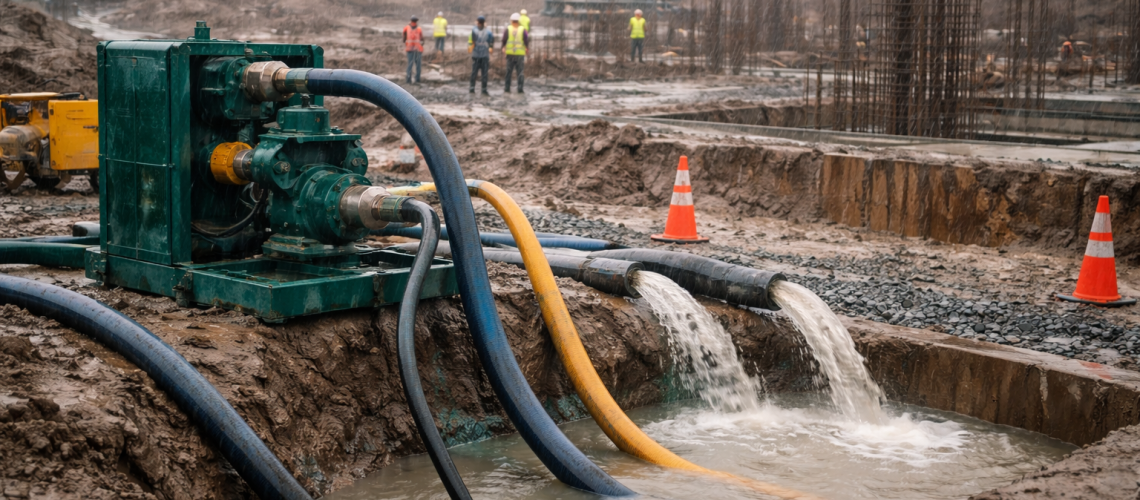

Why Dewatering Matters More Than Ever
Construction dewatering is the process of removing groundwater and surface water from excavation sites to create safe, stable working conditions. During the rainy season, this process becomes not just important, but critical. Heavy rainfall can transform a manageable construction site into a hazardous, delay-prone nightmare within hours, compromising soil stability, worker safety, and project timelines.
The presence of unwanted water creates a cascade of problems: muddy conditions that endanger workers, compromised soil compaction that threatens structural integrity, and contaminated runoff that violates environmental regulations. Understanding how to effectively manage dewatering during wet weather separates successful projects from costly failures.
Understanding Water Sources: Surface vs. Groundwater
Before selecting dewatering methods, you must identify the source of the water. Construction sites face two distinct water challenges.
Surface Water
Originating from rain, runoff, or nearby water bodies, surface water presents immediate visibility but unpredictable volume. During heavy rains, flow rates can overwhelm inadequate systems, bringing debris, sediment, and contaminants that clog pumps and damage equipment.
Groundwater
This subsurface threat seeps into excavations from below, creating persistent wet conditions even during dry spells. Groundwater levels fluctuate seasonally, often rising during rainy periods, and different soil types require different management approaches.
Major Dewatering Methods: Choosing the Right Approach
1. Sump Pumping: The First Line of Defense
Sump pumping represents one of the simplest and most economical dewatering approaches. Groundwater is allowed to collect in excavated sumps where pumps remove it from the site.
Best for: Shallow excavations with permeable soils like sand or gravel.
Advantages: Quick setup, flexible installation, and minimal equipment.
2. Wellpoint Systems: The Versatile Workhorse
Wellpoint dewatering involves installing small-diameter wells around the excavation perimeter connected to a vacuum pump system that lowers the groundwater table.
Best for: Medium-depth excavations up to about 5.5 meters below pump level.
3. Deep Well Systems: For Serious Water Problems
Deep wells with submersible pumps are used for deeper excavations or high groundwater conditions.
Best for: Deep excavations and long-term groundwater control.
4. Eductor Systems: The Low-Permeability Solution
Eductor or ejector systems use high-pressure water circulation to create a vacuum that draws water from low-permeability soils such as silts and clays.
Best for: Deep excavations in clay or stratified soils.
Rainy Season Best Practices
Successful rainy season construction requires preparation before storms arrive.
Pre-Rain Preparation: The 48-Hour Rule
Survey site elevations, install silt fencing and sediment pits, and ensure pumps and drainage equipment are ready before rain begins.
During the Storm: Active Management
Avoid pumping during extremely heavy rain when soil infiltration capacity is exceeded. Monitor pumps and remove debris to maintain flow.
Post-Storm Recovery: The 24-Hour Sprint
Immediately pump standing water, aerate saturated soil, reassess groundwater levels, and document any site impacts.
Environmental Compliance
Dewatering discharge must follow environmental regulations including sediment removal, filtration, and proper discharge locations.
Advanced Strategies for Extreme Conditions
Temporary roofing structures, flood bypass systems, and specialized techniques like electro-osmosis can be used in extreme conditions.
The Economic Reality: Cost vs. Consequence
Investing in proper dewatering systems is far less expensive than dealing with delays, structural failures, environmental fines, or excavation rework caused by poor water management.
Conclusion
Rainy season construction can still succeed with proper planning, correct dewatering methods, and rapid response to changing conditions. Understanding site hydrogeology and maintaining strong environmental compliance are key to keeping projects on track.