
Why Kitchen Design Matters
Designing a kitchen goes beyond selecting cabinets and appliances. The kitchen is the heart of the home, a space where functionality, comfort, and aesthetics must work together seamlessly. A well-designed kitchen improves workflow efficiency, enhances social interaction, and increases property value.
Modern kitchen design focuses on creating spaces that are practical, visually appealing, and tailored to the user’s lifestyle.
Understanding User Needs Before Designing a Kitchen
Successful kitchen design begins with understanding how the space will be used. Every user has unique cooking habits, storage needs, and lifestyle preferences.
Key considerations include:
- Frequency of cooking and food preparation
- Number of users in the space
- Entertaining and social interaction needs
- Storage requirements
- Technology integration
Designing around real-life behavior ensures a kitchen that is both functional and enjoyable.
Choosing the Right Kitchen Layout
The layout is the foundation of every successful kitchen design. An efficient layout minimizes movement and creates a smooth workflow.
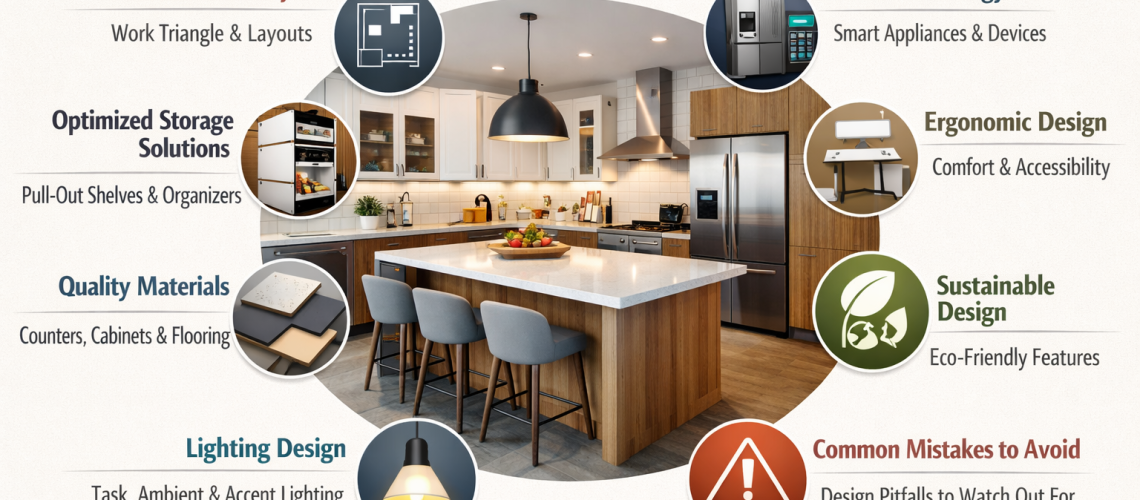
The Kitchen Work Triangle
The work triangle connects:
- The refrigerator
- The sink
- The cooking area
Maintaining balanced distances between these elements improves efficiency and comfort.
Popular Kitchen Layout Types
L-Shaped Kitchen
- Ideal for open-plan spaces
- Encourages natural circulation
- Flexible for small or large homes
U-Shaped Kitchen
- Maximum counter space
- Efficient workflow
- Suitable for serious cooking environments
Galley Kitchen
- Perfect for compact apartments
- Highly efficient design
- Reduces wasted movement
Island Kitchen
- Adds multifunctional workspace
- Encourages social interaction
- Provides extra storage and seating
Smart Kitchen Storage Solutions
Efficient storage is essential for maintaining organization and reducing clutter.
Modern storage ideas include:
- Pull-out pantry systems
- Deep drawers for cookware
- Vertical storage for appliances
- Corner cabinet mechanisms
- Hidden storage for minimalist designs
Good storage design enhances usability and keeps the kitchen visually clean.
Selecting Materials for Durability and Style
Material choices impact both performance and visual identity.
Countertop Materials
- Quartz for durability and low maintenance
- Granite for natural texture and elegance
- Solid surfaces for seamless modern aesthetics
Cabinet Finishes
- Matte finishes for contemporary design
- Natural wood for warmth
- High-gloss surfaces for modern luxury
Flooring Options
- Porcelain tiles for durability
- Vinyl for budget-friendly solutions
- Stone finishes for premium spaces
Kitchen Lighting Design Principles
Lighting affects both safety and atmosphere.
Three essential layers of lighting:
- Task lighting for preparation areas
- Ambient lighting for overall illumination
- Accent lighting for aesthetics and mood
Proper lighting enhances usability while elevating visual appeal.
Ergonomics in Kitchen Design
Ergonomic design improves comfort and efficiency.
Key ergonomic considerations:
- Proper countertop heights
- Adequate circulation space
- Accessible storage zones
- Safe appliance positioning
Designing around human movement ensures long-term functionality.
Integrating Smart Technology in Modern Kitchens
Technology is transforming how kitchens operate.
Popular smart kitchen features include:
- Smart refrigerators
- Touchless faucets
- Integrated charging stations
- Smart ovens and energy-efficient appliances
These features improve convenience, sustainability, and user experience.
Sustainable Kitchen Design Strategies
Eco-friendly kitchen design is increasingly important.
Consider:
- Energy-efficient appliances
- LED lighting systems
- Sustainable materials
- Water-saving fixtures
Sustainable design reduces environmental impact while lowering operational costs.
Common Kitchen Design Mistakes to Avoid
Avoid these frequent issues:
- Poor storage planning
- Insufficient lighting
- Ignoring ventilation requirements
- Oversized islands limiting movement
- Prioritizing aesthetics over functionality
Balancing beauty with practicality leads to better design outcomes.
Conclusion
Designing a kitchen requires a balance of creativity, technical planning, and user-centered thinking. By focusing on layout efficiency, smart storage, durable materials, ergonomic principles, and modern technology, designers can create kitchen spaces that are functional, timeless, and inspiring.
A thoughtfully designed kitchen transforms everyday activities into meaningful spatial experiences.
By Kelvin Munyoro
Assistant Architect DKB