
Building a home or commercial property is one of the biggest investments most people make. Unfortunately, many construction projects in Kenya stall midway or end up costing far more than expected. The main reason is simple: poor budgeting before construction begins.
If you are planning to build, having a clear and realistic building budget is the first step to a successful project. Below is a simple guide to help you plan your building budget properly.
1. Start With a Clear Building Plan
Before thinking about costs, you must know exactly what you want to build. The size of the building, number of rooms, type of finishes, and design complexity will all affect the overall cost.
For example, a simple bungalow will cost less than a maisonette with balconies, large windows, and complex roofing. The larger the floor area, the higher the construction cost.
Having architectural drawings prepared early helps professionals estimate the cost more accurately.
2. Understand the Average Construction Cost
In Kenya, building costs are commonly estimated using cost per square metre.
Although prices vary depending on location and quality of finishes, a rough guide for residential buildings is:
- Basic finishes: KES 35,000 – 45,000 per m²
- Standard finishes: KES 45,000 – 60,000 per m²
- High-end finishes: KES 60,000 per m² and above
For instance, if you plan to build a 150 m² house at KES 50,000 per m², the estimated construction cost would be about KES 7.5 million. This is only an initial estimate and should later be confirmed by a professional cost analysis.
3. Hire the Right Professionals
Many people try to reduce costs by skipping professional services, but this often leads to expensive mistakes later.
A proper building project should involve:
- An Architect to design the building
- A Structural Engineer to ensure the structure is safe
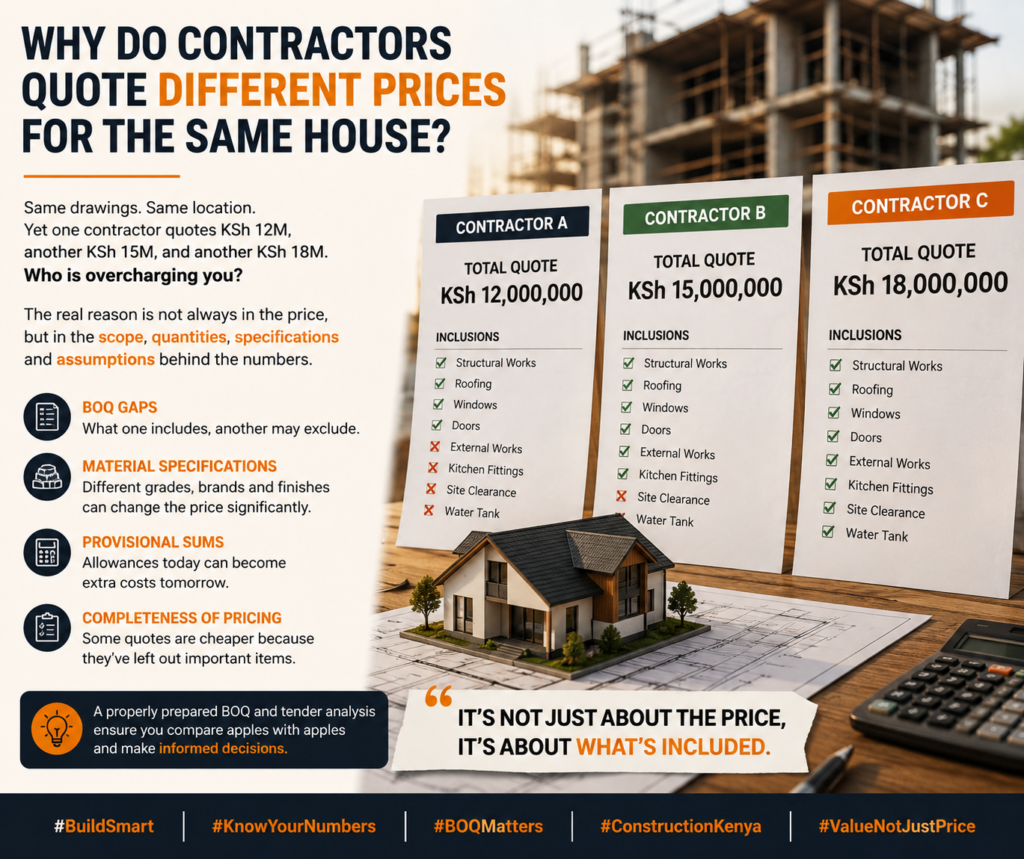
- A Quantity Surveyor to prepare accurate cost estimates and control the budget
A Quantity Surveyor prepares the Bill of Quantities (BQ), which breaks down the entire construction work and helps contractors’ price the project accurately.
4. Include All Project Costs
When planning a building budget, many people focus only on the main construction cost and forget other important expenses.
A complete building budget should include:
- Professional fees
- County government approvals
- Site preparation and excavation
- Utility connections such as water and electricity
- External works like driveways, perimeter walls, and drainage
Ignoring these costs can create unexpected financial pressure during construction.
5. Set Aside a Contingency Fund
Construction projects can sometimes face unexpected costs due to material price changes, design adjustments, or unforeseen site conditions.
To protect your project, it is advisable to set aside 10% to 15% of the total construction cost as a contingency fund. This helps ensure the project continues smoothly even when unexpected expenses arise.
6. Plan Your Construction Cash Flow
Building does not require all the money at once. Construction costs are paid in stages as the project progresses.
Typical stages include:
- Foundation works
- Walling and structural works
- Roofing
- Internal finishes
- External works
A proper cash flow plan ensures funds are available when needed and prevents delays caused by financial shortages.
Final Thoughts
Building without a proper budget is one of the biggest risks in construction. A well-planned budget helps you understand the full cost of your project, avoid unnecessary stress, and complete your building successfully.
Before starting construction, take time to consult the right professionals and develop a clear financial plan. Good budgeting is not just about controlling costs, it is about protecting your investment and ensuring your dream project becomes a reality.