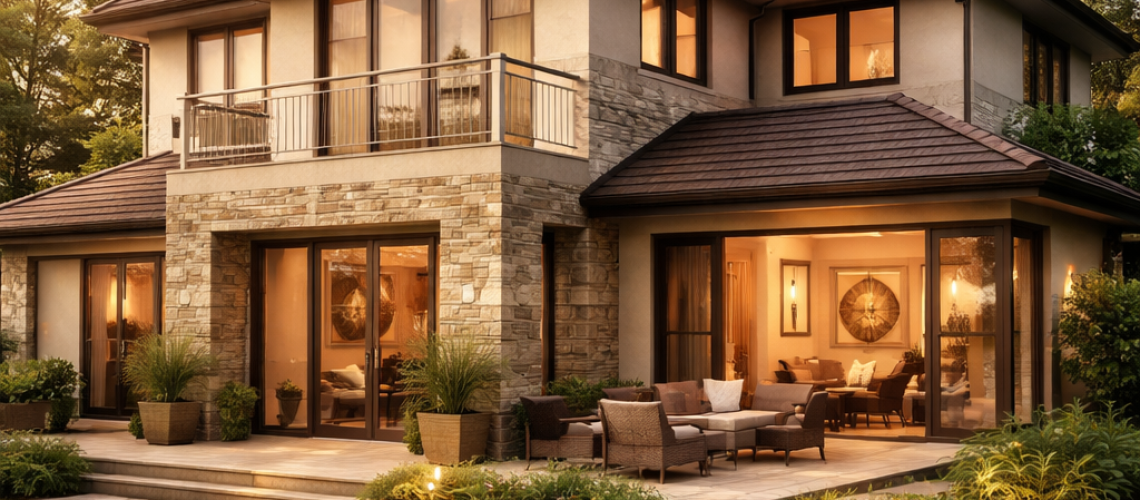

Many people dream of building a big house, i.e., spacious rooms, an impressive staircase, and enough bedrooms to host generations. But rarely do we pause to ask an important question: Who will actually live in that house in the future?
Today, many homeowners design houses around their current phase of life, especially when children are young and the home feels full of energy. Bedrooms multiply, upper floors expand, and grand master suites are placed upstairs as a symbol of success. Yet time quietly changes the purpose of a home.
Children grow up. They move out. Some get married. Others relocate for work or studies. Eventually, the once lively house becomes occupied by only two people or sometimes one. This is where a sustainability conversation begins, not just environmentally, but socially and functionally.
Will the staircase still serve you when age catches up? Or will it slowly become an obstacle, visited only by dust and cobwebs replacing the laughter that once filled the upper floor?
Designing a home should go beyond present comfort; it should anticipate future living realities. A well-planned home considers the timeline of its occupants. As homeowners approach elderly years, mobility becomes a real factor. Conditions such as arthritis or reduced strength may limit access to upper floors that were once used daily without thought.
During recent conversations with our clients, this has become a central discussion: How will you access your home comfortably twenty or thirty years from now?
Simple provisions made during design can make a significant difference later. Planning space for a future portable lift can preserve independence. Introducing an alternative master bedroom on the ground floor ensures comfort when stairs become challenging. Thinking ahead about underutilized upper floors can also open possibilities such as creating independent access through an external staircase, allowing the space to function as a guest wing, rental unit, or caregiver’s quarters.
A home should evolve with its owners, not work against them.
Building big is not the problem. Building without foresight is.
The true measure of a successful home is not its size, but its ability to remain functional, comfortable, and meaningful throughout every stage of life. When planning your dream home, design not only for today’s pride, but for tomorrow’s reality.