
A Complete Guide to Creating Functional, Comfortable, and Elegant Spaces
A bedroom is more than just a place to sleep; it is a personal sanctuary where architecture, psychology, and lifestyle meet. Modern bedroom design focuses on creating spaces that promote relaxation, efficiency, and aesthetic harmony while reflecting individual identity.
Whether designing for luxury homes, compact apartments, or contemporary residences, a well-planned bedroom balances functionality with comfort and visual appeal.
This guide explores the essential architectural principles behind designing practical and beautiful bedrooms.
1. Understanding the Purpose of the Bedroom
Before beginning any design process, it is important to define how the space will be used. Today’s bedrooms serve multiple roles beyond sleeping:
- Rest and relaxation
- Reading and personal retreat
- Remote working or study areas
- Dressing and storage functions
- Entertainment and media zones
Understanding the user’s lifestyle helps shape layout, lighting, and furniture choices.
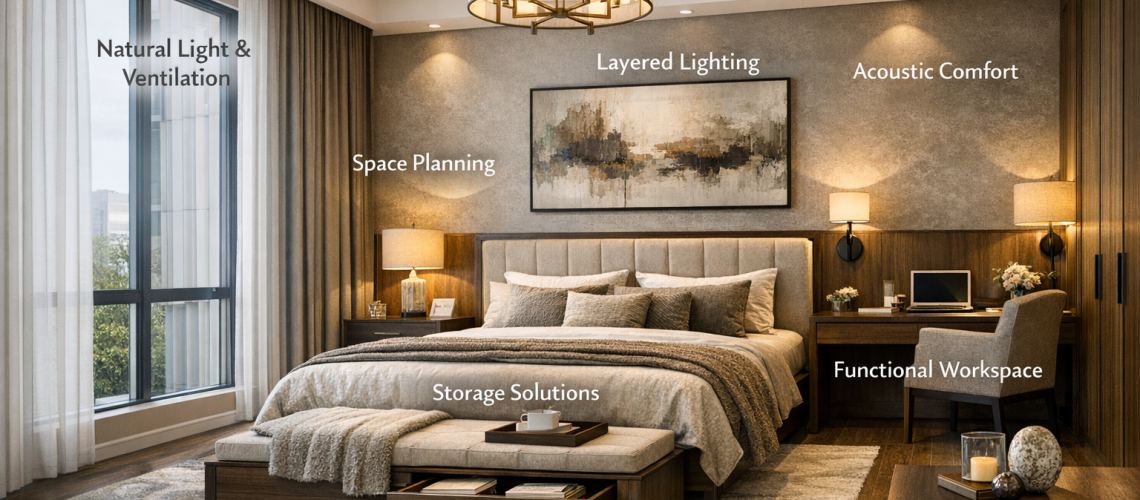
2. Space Planning and Layout Strategy
Proper layout planning is the foundation of successful bedroom design.
Key layout considerations:
- Clear circulation around the bed
- Balanced furniture placement
- Avoiding overcrowding
- Maintaining visual symmetry where appropriate
Architecturally, the bed should often act as the focal point, guiding the orientation of other elements such as wardrobes, lighting fixtures, and seating areas.
3. The Importance of Natural Light and Ventilation
Natural light plays a major role in comfort and wellbeing.
Best practices include:
- Positioning windows to maximize daylight without excessive glare
- Using layered window treatments for flexibility
- Allowing cross-ventilation where possible
Good ventilation improves indoor air quality and contributes to better sleep environments.
4. Choosing the Right Materials and Textures
Material selection influences both aesthetics and emotional response.
High-end bedroom designs often incorporate:
- Soft textiles for warmth and comfort
- Natural materials such as wood or stone
- Neutral palettes with subtle accent colors
- Textural layering through fabrics and finishes
A thoughtful material palette creates a calm and cohesive atmosphere.
5. Lighting Design: Creating Mood and Functionality
Lighting should be layered to serve multiple purposes.
Essential lighting layers:
- Ambient lighting for overall illumination
- Task lighting for reading or working
- Accent lighting to highlight architectural features
Warm lighting tones help create a relaxing environment suitable for rest.
6. Storage Solutions and Organization
Effective storage maintains visual clarity and functionality.
Modern approaches include:
- Built-in wardrobes
- Hidden storage solutions
- Multi-functional furniture
- Minimalist organization systems
Well-designed storage reduces clutter and enhances spatial perception.
7. Acoustic Comfort and Privacy
Bedrooms should minimize noise disruptions.
Architectural solutions include:
- Soft furnishings to absorb sound
- Solid door construction
- Strategic room positioning away from noisy zones
Acoustic comfort directly contributes to improved sleep quality.
8. Personalization and Emotional Design
A bedroom should reflect the personality of its occupant.
This may include:
- Artwork
- Personal décor elements
- Unique textures or statement features
The goal is to create a space that feels intimate yet refined.
Designing a successful bedroom requires more than selecting furniture or colors. It involves thoughtful spatial planning, lighting strategy, material selection, and a deep understanding of human comfort. When these elements work together, the result is a bedroom that supports relaxation, enhances wellbeing, and elevates everyday living.
By Kelvin Munyoro
Assistant Architect DKB