
Can You Build in Phases?
As a Quantity Surveyor (QS), this is one of the most common questions I get from people planning to build their homes. The short answer is yes, you can build in phases, and for many families, it is actually a smart way to manage money.
Building a home is a big financial step, but not everyone has all the money ready at once, and that is completely normal. Phased building allows you to move forward without putting yourself under too much financial pressure.
Let me explain it in a simple way.
What Does “Building in Phases” Mean?
Building in phases means you don’t build the whole house at one time. Instead, you break the work into stages and complete them as money becomes available.
For example:
- Phase 1: Foundation and structure
- Phase 2: Roofing and external walls
- Phase 3: Internal finishes like floors, doors, and painting
You move from one phase to the next when you are financially ready.
Why Many Homeowners Choose to Build in Phases
From my experience as a QS, people usually choose phased construction for these reasons:
- Their income comes in stages
- They are using savings and don’t want to exhaust them
- They expect future income (salary increase, business growth, land sale, etc.)
- They want to avoid large loans or heavy debt
Phased building gives you control. You decide when to pause and when to continue.
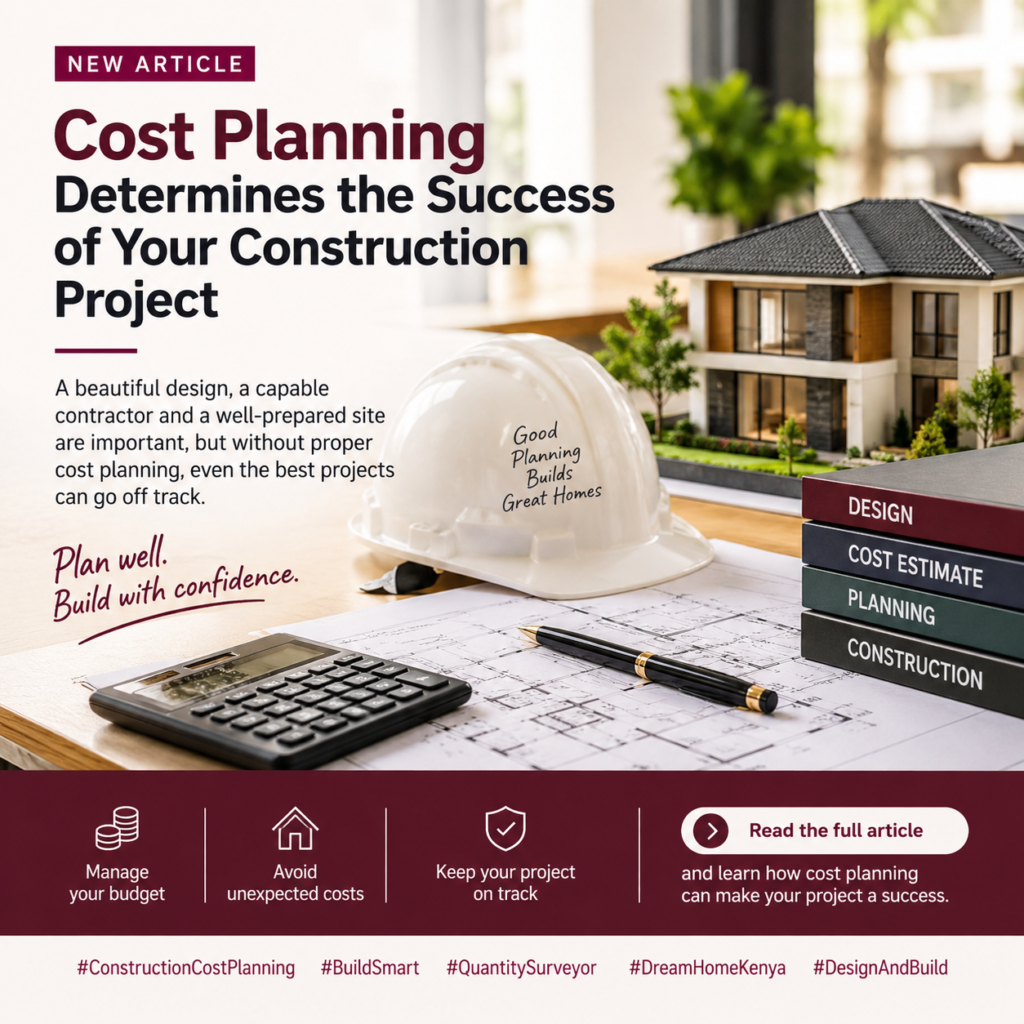
Smart Cost Planning Is the Key
This is where a QS comes in.
Building in phases only works well if there is proper cost planning from the beginning. Without a clear plan, phased construction can end up costing more than building everything at once.
As a QS, my role is to:
- Estimate the full cost of the house from start to finish
- Break the cost into clear phases
- Help you prioritize what must be built first
- Advise where you can save money without reducing quality
This way, even if you build slowly, you are always working toward a clear final goal.
What Should Be Built First?
Not all parts of a house are equal. Some parts must be done properly the first time because they are difficult or expensive to change later.
In most cases, I advise homeowners to:
- Build a strong foundation
- Complete the main structure correctly
- Plan all rooms and spaces from the start
Even if you won’t finish the house immediately, the “skeleton” of the building should already reflect the final design. This avoids costly changes later.
Common Mistakes People Make
I’ve seen many people struggle because of poor planning. Here are some common mistakes:
- Starting construction without a full design
- Changing the plan halfway through
- Using cheap materials for structural work
- Not budgeting for future phases
These mistakes usually lead to wasted money. Phased building should save you stress, not create more.
Can Phased Building Cost More?
Yes, if not planned properly.
Stopping and starting construction can sometimes increase costs due to:
- Price increases over time
- Materials getting damaged if left unfinished
- Redoing work that was not well planned
However, with proper guidance and clear cost planning, these risks can be reduced.
Is Phased Building Right for You?
Phased construction is a good option if:
- You are not in a hurry to move in
- You want to avoid heavy loans
- You have a clear long-term plan
- You are willing to be patient
If you need the house urgently and already have full funding, building in one go may be cheaper and faster.
Final Advice from a QS
Building a home is not a competition. What matters is finishing with a safe, comfortable house without financial stress.
Building in phases is not a sign of weakness. It is often a smart financial decision.
Before you start, speak to a professional, plan your costs clearly, and understand your limits. A well-planned phased build can turn your dream home into reality step by step, at your own pace.
If you plan wisely, your house will grow as your finances grow.
Written by Simon Mbatha,
Associate QS.